Play Radar Scope online! It is one of the top-rated Arcade games you can play for free. No download, emulator, or setup required—jump straight into the action directly in your browser and start playing this classic in seconds.
In the annals of retro gaming history, certain titles stand out not for their overwhelming success, but for their pivotal role in shaping the industry. Among these is Radar Scope, Nintendo’s ambitious 1980 arcade debut. While not a commercial triumph, this early fixed-shooter laid crucial groundwork, demonstrating Nintendo’s initial foray into the competitive arcade scene and inadvertently setting the stage for one of gaming’s most iconic creations. It’s a testament to how even perceived failures can become cornerstones of innovation.
The Genesis of Nintendo’s Arcade Aspirations
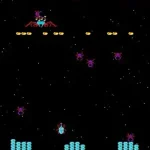
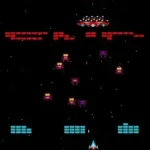
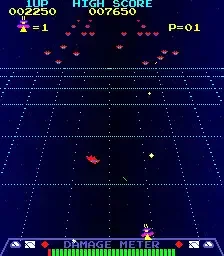
Before becoming a household name with consoles, Nintendo was a prominent player in the arcade market. Radar Scope represented a significant investment and a bold statement of intent. Designed by Genyo Takeda, the game clearly drew inspiration from the immensely popular Space Invaders, a common practice at the time. However, Nintendo sought to differentiate it with a unique visual flair: a pseudo-3D perspective that offered a sense of depth as alien ships descended from the horizon. This attempt at visual innovation, combined with its fast-paced action, was Nintendo’s bid to capture the burgeoning arcade audience.
Gameplay: A Familiar Yet Frustrating Challenge
Players controlled the “Sonic Blaster,” a ship tasked with defending against waves of alien attackers known as “Radar Scopes” and “Micron” enemies. The core gameplay involved shooting down these foes before they reached the bottom of the screen, a mechanic familiar to any Space Invaders clone enthusiast. What made Radar Scope distinct, and arguably more challenging, was its relentless difficulty and the speed of the enemy descent. The pseudo-3D effect, while innovative, could sometimes make judging distances tricky, leading to a steep learning curve that many casual players found off-putting. The game demanded precision and quick reflexes, often punishing even minor mistakes severely.
A Pivotal Failure and Its Unforeseen Legacy
Despite Nintendo’s hopes, Radar Scope proved to be a commercial disappointment, particularly in the crucial North American market. American distributors found the game unappealing, resulting in a massive surplus of unsold arcade cabinets. This financial predicament threatened to cripple Nintendo of America. In a desperate move, company president Hiroshi Yamauchi tasked a young designer, Shigeru Miyamoto, with repurposing these cabinets. Miyamoto’s creative genius, coupled with the existing hardware, led to the development of a new game that would become an unprecedented success.
Radar Scope is remembered today not for its intrinsic gameplay excellence, but for its role as a catalyst. It’s the “failure” that birthed a legend.
- Nintendo’s First Major Arcade Title: It marked Nintendo’s serious entry into the global arcade scene.
- Direct Precursor to Donkey Kong: The unsold cabinets were famously converted into the hardware for Shigeru Miyamoto’s groundbreaking platformer.
- Early 3D Perspective Attempt: Showcased Nintendo’s early experimentation with visual depth in gaming.
- A Lesson in Adaptation: Its commercial struggles forced Nintendo to innovate, leading to a pivotal shift in creative direction.
While Radar Scope itself never achieved widespread fame, its existence and subsequent commercial struggles were instrumental in shaping Nintendo’s destiny. It was the necessary stepping stone, the crucible from which a true gaming icon would emerge, forever altering the landscape of video games. Its legacy is a powerful reminder that sometimes, the greatest successes are born from the ashes of unexpected setbacks.
![The King of Fighters 2002 Magic Plus II (bootleg) [Bootleg]](https://www.retrogames.me/wp-content/uploads/the-king-of-fighters-2002-magic-plus-ii-bootleg-bootleg-150x150.webp)