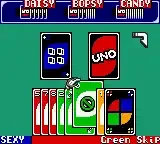
Play Uno (Europe) (En,Fr,De,Es,It,Nl) online! It is one of the top-rated Game Boy Color games you can play for free. No download, emulator, or setup required—jump straight into the action directly in your browser and start playing this classic in seconds.
A Timeless Card Game: Uno
Uno, a game that has spanned generations, effortlessly blends strategy with luck, making it a staple in family game nights and gatherings. First introduced in the early 1970s, this vibrant card game has become an iconic figure in the gaming community, known for its simple yet engaging mechanics that encourage players of all ages to join in the fun. Its combination of colorful cards and competitive play has ensured its lasting presence in both living rooms and gaming apps, solidifying its status as a cultural phenomenon.
Core Gameplay Mechanics
At its core, Uno is straightforward: players aim to be the first to eliminate all their cards by matching them to the card in the discard pile by color or number. Special action cards like Reverse, Skip, and Draw Two add layers of strategy, while the beloved Wild and Wild Draw Four cards introduce unpredictability. This balance between chance and tactical thinking gives Uno its robust appeal. The game’s simplicity is deceiving; mastering the nuances of card play and anticipating opponents’ moves can be a challenging endeavor, ensuring that every match is unique and thrilling.
The Game’s Rich History
Originally created by Merle Robbins in 1971, Uno was designed as a family game to simplify the complexities of traditional card games like Crazy Eights. After its initial release, the game quickly gained popularity, leading to its acquisition by Mattel in 1981. Over the decades, Uno has evolved into various themed editions, mobile applications, and even tournaments, showcasing its adaptability. Its historical significance lies not only in its entertainment value but also in the way it has brought people together across cultures and generations.
The Cultural Impact of Uno
The legacy of Uno extends beyond its gameplay; it has become a cultural touchstone. Its colorful design and engaging nature have made it an essential part of many social gatherings, breaking down barriers among players of various backgrounds. The game’s relatable premise fosters laughter and camaraderie, making it a favorite for family gatherings and friendly get-togethers. Today, Uno is not just a game but a nostalgic portal, reminding players of cherished moments spent with loved ones. Its ongoing popularity speaks to its ability to connect people, proving that sometimes, simple is best.
In conclusion, the enduring essence of Uno lies in its capacity to bring joy and excitement to any setting. Through its engaging gameplay mechanics and rich history, it has carved out a lasting niche in the world of gaming. As we continue to discover new ways to enjoy this classic card game, Uno remains a beloved symbol of fun and togetherness, ensuring its place in our lives for years to come.