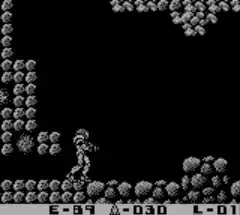
Play Metroid II – Return of Samus (World) online! It is one of the top-rated Game Boy games you can play for free. No download, emulator, or setup required—jump straight into the action directly in your browser and start playing this classic in seconds.
Gameplay Mechanics and Challenge
Metroid II introduced gamers to the intricate and atmospheric world of Samus Aran, blending exploration, combat, and puzzle-solving in an innovative way. Players navigate the desolate and cavernous environments of the alien planet SR388, tasked with eradicating the Metroid species. The game’s design emphasized non-linear exploration, requiring players to gather various upgrades while backtracking through its labyrinthine levels. The difficulty ramps up with each encounter, as bosses and enemies offer a relentless challenge that keeps players engaged and on edge.
The gameplay mechanics showcase the series’ signature elements, such as the ability to acquire power-ups that enhance Samus’s abilities. Notably, the introduction of the Spider Ball lets players cling to walls, adding a layer of strategy in navigating complex terrains. This innovation not only deepened the tactical elements but also enriched the overall experience, providing a sense of accomplishment in mastering the game’s controls and intricacies.
Historical Context and Design Innovations
Released in 1991 for the Game Boy, Metroid II arrived at a time when portable gaming was still in its infancy. Developers at Nintendo pushed the technological limits of the Game Boy, employing innovative graphical design techniques to create a striking atmosphere, balancing moody backgrounds with engaging sprites. The game was groundbreaking for its use of sound, utilizing ambient effects to enhance the feeling of isolation, an element that still resonates strongly with players today.
The historical significance of Metroid II cannot be overstated; it laid the groundwork for future entries in the series. The mechanics adopted, including exploration-based gameplay and intricate world design, set a precedent that would influence countless games. Its success also reinforced Nintendo’s reputation for crafting engaging narratives that challenge players both intellectually and skillfully.
Cultural Impact and Legacy
Metroid II remains a pivotal entry in video gaming history, remembered for its innovative design and challenging gameplay. The game not only contributed to the evolution of the Metroid franchise but also sparked a wave of similar titles focused on exploration and atmospheric storytelling. Its legacy continues today, with fans celebrating its influence on both 2D and 3D platformers.
- Introduction of non-linear gameplay
- Enhancements in audio and visuals for portable systems
- Inspiration for future game design
In conclusion, Metroid II stands out as a seminal title that encapsulates the charm and challenge of retro gaming. Its blend of exploration, strategic gameplay, and atmosphere creates an experience that still captivates gamers. As nostalgia continues to draw new and veteran players alike, the influence of this classic remains palpable across modern gaming landscapes.