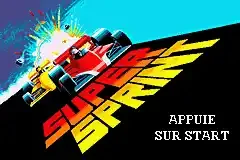
Play 2 in 1 – Spy Hunter & Super Sprint (E)(sUppLeX) online! It is one of the top-rated Game Boy Advance games you can play for free. No download, emulator, or setup required—jump straight into the action directly in your browser and start playing this classic in seconds.
Core Gameplay Mechanics and Difficulty
The charm of Spy Hunter and its companion title, Super Sprint, lies in their addictive gameplay mechanics that captivated gamers in the arcades of the 1980s. Spy Hunter, a classic top-down vehicular combat game, places players behind the wheel of a high-tech car, tasked with taking down enemy agents while avoiding obstacles and enemies. As players navigate through various environments, the challenge escalates with increasingly complex enemy patterns and treacherous road conditions.
Super Sprint complements this experience by allowing players to zoom around a vibrant, isometric track in miniature racing cars. The unique handling of these cars, combined with power-ups and track shortcuts, adds a layer of strategy to the frantic racing action. Players often find themselves facing difficult turns and challenging opponents, creating intense moments that require quick reflexes and sharp decision-making. These elements contribute to a difficulty that, while initially manageable, escalates quickly, ensuring players remain engaged and invested in their progress.
Historical Background and Technical Innovations
Released in the early 1980s, both titles emerged from a period of rapid innovation in arcade gaming. Developed by Bally Midway, Spy Hunter introduced a pioneering combination of racing and shooting gameplay, utilizing an innovative control scheme that seemed cutting-edge at the time. Players could switch between offensive and defensive maneuvers, a feature relatively unseen in games up to that point. This mechanic not only made gameplay more dynamic but also inspired future game developers to explore hybrid genres.
Super Sprint was a technological marvel in its own right, featuring a unique design that allowed multiple players to compete simultaneously. Its colorful graphics, coupled with an engaging soundtrack, provided a sensory experience that kept gamers returning to the arcade. The game’s isometric perspective offered a fresh take on racing games, allowing players to perceive the race track in a new light, heightening the excitement and immersion that kept audiences engaged.
Cultural Impact and Legacy
The legacy of Spy Hunter and Super Sprint extends far beyond their initial releases. These games paved the way for a new genre of vehicular action and racing games that resonate even today. Their influence can be seen in modern titles that borrow heavily from the mechanics and themes introduced in these classics, proving their enduring appeal. Fans of retro gaming continue to celebrate these titles for their nostalgic value and the foundations they laid for future innovations in the gaming industry.
In conclusion, the combination of innovative mechanics, vibrant graphics, and challenging gameplay solidify the place of Spy Hunter and Super Sprint in gaming history. Their ability to engage players remains a testament to their design, ensuring they are remembered not just as relics of the past, but also as catalysts for future gaming experiences. Whether by reliving those arcade memories or appreciating their historical significance, these games continue to captivate new generations of gamers.