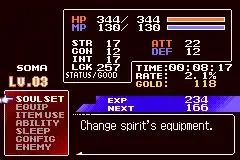
Play Castlevania – Aria of Sorrow – Persephone Hack online! It is one of the top-rated Game Boy Advance games you can play for free. No download, emulator, or setup required—jump straight into the action directly in your browser and start playing this classic in seconds.
Core Gameplay Mechanics and Difficulty
Castlevania redefined action role-playing games with its innovative mechanics, especially evident in “Aria of Sorrow.” Players assume the role of Soma Cruz, who navigates a sprawling, intricately designed castle teeming with various enemies and platforming challenges. What sets this title apart is its “Tactical Soul” system, which allows players to collect abilities from defeated foes, adding a strategic layer to gameplay. This diversity enables players to customize their playstyles, fostering a unique experience for each run.
The difficulty level in “Aria of Sorrow” is notable, striking a balance between accessibility for newbies and challenges for seasoned players. Varied enemy behaviors and intricate boss battles keep players engaged while requiring skill and precision. This game marked a shift from previous titles, incorporating RPG elements that encouraged exploration and character development, making every encounter memorable and rewarding.
Historical Release Background
<p"Aria of Sorrow" was released in 2003 for the Game Boy Advance, a platform that had become a hotspot for retro gaming brilliance. As one of the last major titles for the system, it showcased the capabilities of handheld consoles at that time. Developed by Konami, this title continued the rich legacy of the "Castlevania" series, which began back in 1986. The game's release coincided with a renaissance of advanced gameplay mechanics and engaging storylines in the gaming industry.
With its pixel art graphics and atmospheric soundtrack, “Aria of Sorrow” immediately captured the attention of gamers and critics alike. The combination of its engaging narrative and deep mechanics contributed to its status as a classic. It introduced fans to a new storyline connected to previous games while innovating on gameplay aspects that would influence future titles in the genre.
Cultural Impact and Long-Term Legacy
The impact of “Aria of Sorrow” resonates deeply within the gaming community, becoming a staple in retro gaming discussions. Its success led to continued expansions and inspired subsequent titles in the Castlevania franchise. Many fans regard it as one of the finest GBA titles, often pointing to its intricate design and memorable characters. Its legacy is further cemented by its inclusion in various retro compilations and fan discussions, ensuring that new generations of gamers can appreciate this landmark title.
In conclusion, “Aria of Sorrow” stands as a testament to the innovative spirit of its time. Its engaging mechanics, strong narrative, and lasting cultural impact allow it to maintain a cherished place in gaming history. Players continue to celebrate its achievements, showcasing how it laid the groundwork for many RPGs that followed. As we reflect on this classic, it’s clear that its influence remains relevant, ensuring a place in the hearts of both nostalgic fans and new players alike.