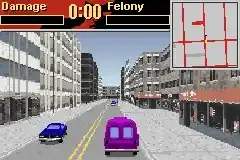
Play Driver 2 Advance (E)(Eurasia) online! It is one of the top-rated Game Boy Advance games you can play for free. No download, emulator, or setup required—jump straight into the action directly in your browser and start playing this classic in seconds.
Unleashing the Open World: Gameplay Mechanics
In the realm of portable gaming, few titles have captured the essence of freedom quite like Driver 2 Advance. This game introduced players to a sprawling open-world environment filled with engaging missions, race challenges, and exploration that kept gamers on their toes. Players could navigate through busy city streets, performing car stunts and evading law enforcement while experiencing the thrill of high-speed chases.
The gameplay mechanics emphasized realism, with a focus on driving dynamics that mirrored those in the original console versions. This intricate attention to detail, along with a robust mission structure, challenged players to complete various objectives while managing vehicle control and the unpredictability of AI opponents. The difficulty curve ensured players remained engaged without diminishing the thrill of the gameplay—an aspect that still resonates with fans today.
A Historical Perspective on Release and Design Innovations
Launched in 2002 for the Game Boy Advance, Driver 2 Advance marked a significant transition in the franchise, moving from consoles to handheld devices without sacrificing quality. The developers at Reflections Interactive understood the limitations of portable hardware but leveraged them to create a surprisingly rich gaming experience. The result was a beautifully styled game that included expansive city landscapes and a variety of vehicles, enhancing the sense of freedom.
Graphically, the game employed impressive techniques for its time, showcasing an intricate level of detail that immersively rendered urban environments. The innovative use of 3D graphics also provided a fresh look compared to other titles on the platform, elevating the overall aesthetic appeal and ensuring that players felt connected to the virtual world. These early advancements set a precedent for future handheld games, influencing a generation of developers.
Cultural Impact and Long-Term Legacy
The impact of Driver 2 Advance transcends mere gameplay; it carved a niche in the hearts of gamers craving accessible yet complex driving experiences. Many remember it fondly for its blend of nostalgia and innovation. The title’s inclusion in virtual gaming discussions illustrates its lasting influence in the industry, reminding us of an era where handheld gaming began to flourish.
In conclusion, Driver 2 Advance not only pushed the boundaries of what was expected from handheld gaming but also left an indelible mark on gaming culture. Its compelling mechanics and innovative design choices continue to be celebrated by fans, ensuring its legendary status in the world of retro gaming. Whether it’s the memorable missions or the engaging driving experience, this game is a testament to the potential of portable gaming, securing its legacy for years to come.