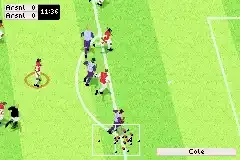
Play FIFA 2003 (U)(Mode7) online! It is one of the top-rated Game Boy Advance games you can play for free. No download, emulator, or setup required—jump straight into the action directly in your browser and start playing this classic in seconds.
Revolutionary Gameplay Mechanics
The release of FIFA 2003 marked a significant evolution in sports gaming, particularly with its innovative gameplay mechanics. Players were greeted with a refined control system that emphasized realism and strategy. The introduction of the “Freestyle Control” allowed gamers to pull off a myriad of moves, enhancing the overall experience and making matches more dynamic. The inclusion of a refined AI system meant that opposing teams could react intelligently to player actions, simulating the unpredictable nature of real football.
Moreover, the game featured various modes such as career and tournament, providing players with multiple ways to engage in kick-off gameplay. With improved shooting mechanics and the introduction of skill moves, FIFA 2003 offered a robust playground for both casual and competitive players. These elements combined to create a challenging yet enjoyable experience that appealed to a wide audience, ensuring its place as a beloved title among football fans.
A Snapshot of Historical Context
<pReleased in 2002, FIFA 2003 was notably developed during a time when football video games were gaining massive traction in the gaming community. This period saw continued rivalry between EA Sports and Konami, producing an engaging competition that drove innovation. With enhanced graphics and an extensive roster of licensed teams, the game reflected the growing realism that players desired. It was pivotal in transitioning sports games from simple joystick movements to intricate gaming experiences.
The game’s soundtrack also captured the spirit of the early 2000s with popular tracks, adding to the immersive feel. Nostalgic players often reminisce about the excitement of gathering friends for local multiplayer matches, making FIFA 2003 a touchstone of their gaming past. The release underscored a cultural shift where video games became central to community interactions and social gatherings.
Enduring Legacy and Influence
<pEven years later, FIFA 2003 is celebrated for setting benchmarks in sports gaming. It has inspired subsequent FIFA titles and has been referenced in discussions about the evolution of sports video games. Players fondly remember the classic gaming experience it offered, cementing its role in the nostalgic fabric of early 2000s gaming history.
- Revolutionized gameplay mechanics with Freestyle Control
- Introduced intelligent AI for unmatched realism
- Enhanced graphics showcasing licensed teams
Conclusion
<pThe impact of FIFA 2003 extends far beyond its initial release. By introducing new gameplay mechanics and reflecting the cultural zeitgeist of its time, it carved out a lasting legacy in the history of sports video games. As players continue to revisit the title, it remains a golden era reference point, reminding us of the joy and camaraderie that gaming can foster.