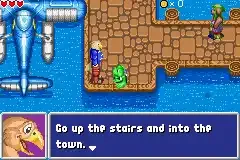
Play Frogger’s Journey – The Forgotten Relic (U)(Mode7) online! It is one of the top-rated Game Boy Advance games you can play for free. No download, emulator, or setup required—jump straight into the action directly in your browser and start playing this classic in seconds.
Exploring Frogger’s Gameplay Mechanics and Challenges
The essence of Frogger lies in its simple yet exhilarating gameplay that has captivated players since its inception. Players must navigate a frog across a busy road and a treacherous river, all while avoiding various hazards like cars, logs, and alligators. The game challenges reflexes and timing, requiring players to make split-second decisions to survive each level. The difficulty ramps up with each progression, introducing faster vehicles and more obstacles, creating an addictive experience that keeps players returning for more.
The controls are refreshingly straightforward, consisting of only directional movements. However, the strategic element of planning one’s route elevates the gaming experience, making it not just about speed but also precision. Successfully reaching safety brings a sense of accomplishment, showcasing how well-designed mechanics can enhance emotional engagement in gaming.
The Historical Significance of Frogger
Released in 1981 by Konami, Frogger quickly became a flagship title for arcade gaming. At a time when competitors focused more on complex narratives and graphics, Frogger thrived on its unique premise and addictive gameplay. Its innovative design drew players into a whimsical, vibrant world that differed from the space invaders and maze games dominating the era. This fresh approach resonated with audiences, leading to its status as a cultural icon.
From arcades to home consoles, Frogger’s influence extends beyond mere nostalgia. It was one of the first titles to blend action with strategic thinking, paving the way for future genres. Its vibrant graphics and catchy sound effects have become hallmarks of retro gaming, cementing its place in gaming history. By inspiring countless adaptations and sequels, Frogger has remained relevant, reminding players of the joy of classic gaming.
The Lasting Legacy of Frogger
Why does Frogger still resonate decades later? It’s not just a game; it’s a symbol of an era that introduced many to the joys of video gaming. The charming pixelated graphics and exhilarating challenges trigger a sense of nostalgia among long-time gamers. Today, the game continues to be relevant, appearing on modern platforms and even influencing new games with its core mechanics.
Conclusion
The enduring charm and innovative design of Frogger secure its place in gaming history as not merely a game but a cultural landmark. As players navigate through the chaos of traffic and river hazards, they engage with a piece of history that laid the groundwork for many modern games. Its legacy endures not only in the hearts of fans but also in the realm of gaming, reminding us why we fell in love with arcade games in the first place.