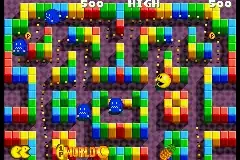
Play Pac-Man Collection (J)(Cezar) online! It is one of the top-rated Game Boy Advance games you can play for free. No download, emulator, or setup required—jump straight into the action directly in your browser and start playing this classic in seconds.
Exploring the Gameplay Mechanics of Pac-Man
The allure of Pac-Man lies in its deceptively simple yet challenging gameplay mechanics, which have captivated players since its debut in 1980. The primary objective tasks players with guiding Pac-Man through a maze, consuming pellets while avoiding colorful ghosts. Each level introduces increasing difficulty, with ghosts utilizing different strategies to capture the iconic yellow character. The strategic play of seeking power pellets, which temporarily turn the tables on the ghosts, adds layers of depth to the game. Not only does it demand quick reflexes, but it also tests players’ ability to think critically in high-stress situations.
The Historical Significance of Pac-Man
Released by Namco, Pac-Man revolutionized the gaming landscape in the early ’80s, creating an undeniable cultural phenomenon. Initially designed to appeal to a broader audience, it attracted both seasoned gamers and newcomers, particularly women, which was a rarity at the time. The game’s fusion of maze-chase gameplay and quirky visuals contributed significantly to its popularity. It became a staple in arcades, leading to expansive merchandise and even a television animated series. Its influence is still felt today, inspiring countless sequels and spin-offs, and establishing a legacy that solidifies its place in gaming history.
Cultural Impact and Longevity
Pac-Man’s legacy stretches far beyond high scores and arcade cabinets. It became a pop culture icon, represented in various art forms, from music to fashion. Its signature design elements and sounds are instantly recognizable, echoing nostalgia for many who grew up during the video game boom of the 1980s. Today, it continues to resonate, inspiring modern titles and being celebrated in competitive gaming and retro gaming events worldwide.
Conclusion
The enduring appeal of **Pac-Man** is a testament to its brilliant design and cultural significance. As a pioneer in the gaming world, it not only introduced innovative gameplay mechanics that captivated diverse audiences but also established a pop culture legacy that remains vibrant today. Its unique ability to blend simple pleasures with an ever-increasing challenge keeps it alive in the hearts of gamers, proving that classic gaming continues to thrive in an ever-evolving digital landscape.