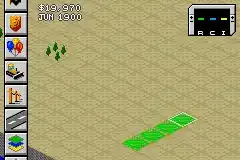
Play Sim City 2000 (U)(GBANow) online! It is one of the top-rated Game Boy Advance games you can play for free. No download, emulator, or setup required—jump straight into the action directly in your browser and start playing this classic in seconds.
Understanding the Mechanics of Sim City 2000
Sim City 2000 stands out in the realm of city-building simulation games, offering players a rich tapestry of challenges and responsibilities. Players assume the role of a city planner, juggling various tasks such as zoning, taxation, and infrastructure development. The increase in complexity from its predecessor introduces a level of intricacy that immerses players into the delicate balance of economic and urban planning. With the ability to customize landscapes and an assortment of scenarios, the game innovatively combines strategic gameplay with creative freedom.
This game revolutionized city-building mechanics by allowing players to control not only the urban layout but also the economic conditions. Players face the challenge of keeping citizens satisfied while managing budgets and responding to disasters. The intricate balancing act keeps players engaged, ensuring that no two sessions feel the same, as each decision impacts future growth and citizen happiness.
The Historical Significance of Sim City 2000
Released in 1993, Sim City 2000 marked a significant advancement in gaming technology and design. The introduction of isometric graphics provided a more visually appealing experience, alongside the impressive functionality of underground layers for transport networks. The creators, Maxis, pushed boundaries, allowing for a more immersive experience that captivated gamers and educators alike.
At a time when gaming was still finding its footing, the game provided a unique educational framework, teaching resource management and urban planning concepts. Its influence not only shaped future iterations of city simulators but also extended to various genres, cementing its place in gaming history. Today, the echoes of its design principles can be seen in current simulation games, illustrating its long-lasting impact.
Long-Term Legacy and Cultural Impact
Sim City 2000 has left an indelible mark on both the gaming industry and popular culture. Its approach to complex systems and strategic gameplay set a benchmark for future simulation games, encouraging creativity and problem-solving skills. The nostalgic value remains high among fans, having inspired a dedicated community that still shares tips, modifications, and challenges through various online platforms.
In conclusion, Sim City 2000 not only redefined simulation gaming but also educated and engaged players on urban development concepts. Its technical innovations, compelling gameplay, and lasting cultural relevance solidify its status as a classic. Whether revisiting old cities or exploring new ones, the game continues to inspire wonder and creativity among players, proving that even decades later, its legacy endures.