
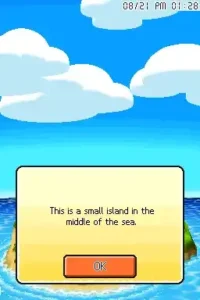
Play Tomodachi Collection (English) online! It is one of the top-rated Nintendo DS games you can play for free. No download, emulator, or setup required—jump straight into the action directly in your browser and start playing this classic in seconds.
Tomodachi Collection English Patch — Playing Tomodachi Life‘s Forgotten Predecessor in English No Download Required
Before Tomodachi Life launched on the Nintendo 3DS and won hearts worldwide, before the long-awaited sequel Tomodachi Life: Living the Dream arrived on Nintendo Switch in 2026, there was a Japan-exclusive Nintendo DS game that started it all. Tomodachi Collection — released in Japan on June 18, 2009 — is the origin of one of Nintendo’s most beloved and eccentric simulation franchises. It was never officially localized for any market outside Japan, and yet today, thanks to a dedicated fan translation community, English-speaking players can experience the game that started it all through the Tomodachi Collection English patch.
This guide covers everything: what Tomodachi Collection is, how it differs from Tomodachi Life and Tomodachi Life: Living the Dream, how to find and apply the Tomodachi collection rom English patch, how to play it on Tomodachi collection ds hardware and on Tomodachi collection 3ds devices, and why — more than fifteen years after its original release — this remarkable game is more relevant and sought-after than ever.
What Is Tomodachi Collection?
Tomodachi Collection (トモダチコレクション, literally Friend Collection) is a social simulation video game developed by Nintendo SPD Group No. 1 and published by Nintendo for the Nintendo DS. It was directed by Ryutaro Takahashi and produced by Yoshio Sakamoto — the same core team that would later bring the franchise to international audiences. The game was released exclusively in Japan on June 18, 2009, and went on to sell over 3.2 million copies by March 2010, making it one of the best-selling Nintendo DS titles of all time in Japan.
The word “Tomodachi” (ともだち) means “friend” in Japanese — and that is precisely the theme at the heart of the game. Tomodachi Collection places the player on a virtual island populated by customizable Mii avatars: the same expressive, rounded characters introduced on the Nintendo Wii in 2006. These Miis live their daily lives autonomously on the island, forming friendships, falling in love, getting married, having children, developing hobbies, and occasionally requesting help from the player. The result is one of the most charmingly absurd and unexpectedly emotional gaming experiences Nintendo has ever produced.
Despite its massive domestic success, Nintendo never officially released Tomodachi Collection outside Japan. The primary reason cited was a technical barrier: the game relied heavily on a Japanese text-to-speech voice synthesis system that could not be adapted to produce natural-sounding English phonetics. The Miis’ synthesized voices — a defining and beloved feature of the game — were simply incompatible with English localization. As a result, international fans were left without access to the title that started the Tomodachi life collection franchise.
The Fan Translation — Playing Tomodachi Collection in English
In November 2013, a fan translator known as jjjewel released the first English translation patch for Tomodachi Collection, designated version 0.80. This translation patch — applied to the official Japanese ROM — converts the vast majority of the game’s text into English, allowing non-Japanese speakers to navigate menus, understand Mii dialogue, follow news broadcasts, and engage meaningfully with all of the game’s core systems.
The jjjewel patch translates most of the essential game text, covering everything a player needs to play from start to finish. However, as an unfinished community project, some content remains untranslated or partially translated:
- Job descriptions — left blank rather than showing Japanese text
- Mii News broadcasts — approximately half of all news articles are translated, covering the most important content
- Song lyrics — some translated lyrics may be cut off mid-display due to text length limitations, though the full text appears when the song is selected
Despite these limitations, the jjjewel patch makes Tomodachi Collection fully playable and enjoyable for English speakers. Over 17,000 downloads were recorded from the Romhacking.net listing alone — a testament to how many fans have sought out this game outside Japan.
Tomodachi Collection English Translation: Again — The Community Continuation
After jjjewel largely disappeared from the internet around 2015, the community did not abandon the project. A new translation effort titled Tomodachi Collection English Translation: Again emerged on GBAtemp, led by community members who sought to expand and refine what jjjewel had built. This ongoing project adds several improvements over the original patch:
- All job descriptions are now translated, filling in the blank content left by the original patch
- All Mii News articles have been translated, giving players access to the full range of the game’s quirky in-game broadcasting
- Japanese text texture replacements have been applied to most on-screen graphics that originally displayed Japanese characters
- Joke content has been partially translated and refined
- The patch works with the majority of Tomodachi collection rom versions, including both the 1.0 and 1.1 releases, by first upgrading older ROMs before applying the new translation
- Distributed as an Xdelta patch with included instructions, making application straightforward for users of all technical backgrounds
The “Again” project represents the community’s ongoing commitment to making Tomodachi Collection as accessible and complete as possible for English-speaking players — a labor of love sustained entirely by fan enthusiasm.
Core Gameplay of Tomodachi Collection
Understanding Tomodachi Collection requires understanding what kind of game it is — and what it is not. This is not a conventional video game with objectives, a progression system, or a win state. It is a social simulation: an open-ended, observational experience centered on watching virtual people live their lives. The player acts as an overseer, a godlike presence who manages needs, resolves problems, and occasionally intervenes in the social dynamics of island life.
Miis and Island Life
The game supports up to 100 Miis living together on the player’s island. These can be created from scratch using the in-game Mii Maker, transferred directly from a Wii console via wireless connectivity, or imported from other players’ Nintendo DS systems through local wireless. Each Mii is assigned a personality from up to 16 different personality combinations, which determines how they behave, what they like, who they get along with, and how they interact with other residents.
The Miis live in an apartment building — a departure from the free-roaming island of later games — and the player visits their apartments to check in on their needs. Each Mii generates thought bubbles indicating what they desire: food, clothing, items, companionship, or help with a problem. The player fulfills these requests, and in return the Mii gains experience, levels up, and unlocks new content on the island.
Relationships and Social Dynamics
The beating heart of Tomodachi Collection is its relationship system. Miis form friendships organically through proximity and interaction. They develop crushes, confess feelings, get rejected, fall in love, begin dating, and eventually marry. Married couples can have children — and those children inherit physical traits and personality elements from both parents, creating a genuinely emergent generational system.
The unpredictability of these relationships is a defining feature. The player does not control who falls in love with whom. The game generates these outcomes based on compatibility, personality, and a degree of randomness — which means every island’s story is genuinely different. Players who base their island on real friends, family members, or famous personalities often find the resulting relationship drama unexpectedly compelling and frequently hilarious.
Items, Gifts, and Progression
Progression in Tomodachi Collection is tied to the island’s development. New shops, locations, and features unlock as more Miis move in and the player fulfills more requests. The game’s item system includes several categories:
- Food — fed to Miis to satisfy hunger and boost happiness; Miis have individual food preferences and dislikes
- Clothing — outfits that change how a Mii appears on the island; Miis will request specific styles and reject clothing that doesn’t suit them
- Interior items — furniture and decorations for Mii apartments that affect their daily life
- Goods — special items occasionally gifted by Miis as rewards, usable in other interactions
- Treasures — rewards won through mini-games against Miis, sellable at the island’s pawn shop
Mini-Games, Events, and Special Features
Tomodachi Collection includes a variety of mini-games and special events that break up the daily simulation loop:
- Concerts — Miis perform songs with synthesized voices; one of the game’s most beloved and surreal features
- Lottery draws — island-wide events where Miis compete for prizes
- UFO sightings and other bizarre events — the game’s signature absurdist humor manifests through unexpected island happenings
- The Question Hall — a location that unlocks as the island develops, offering mini-game activities
- Microphone interaction — players can speak into the Nintendo DS microphone to teach Miis short phrases, and can type text for Miis to vocalize using the text-to-speech engine
- Mii News — regular in-game news broadcasts that report on island events, relationships, and activities in a deadpan journalistic style
How to Get the Tomodachi Collection ROM and English Patch
The Tomodachi collection rom English translation is applied as a patch to the original Japanese game ROM. Here is the complete process for getting the game running in English:
Step 1 — Obtain the Japanese ROM
You need the Japanese version of Tomodachi Collection for Nintendo DS. The jjjewel patch specifically requires Tomodachi Collection v1.1 — identified by the CRC-32 hash 60C49745 and SHA-1 hash f37d5ff0e3444cf3fab38890efb71f4f14c96994. The “Again” community patch includes an upgrade utility that can convert v1.0 ROMs to v1.1 before applying the translation. You must supply your own legally acquired copy of the game.
Step 2 — Download the English Patch
The original jjjewel patch (version 0.80) is available from Romhacking.net (translation ID 2053), RomHack Plaza, and GameBrew. The newer community “Again” patch and its updates are hosted on GBAtemp and GitHub. Both are distributed free of charge.
Step 3 — Apply the Patch
The jjjewel patch uses a custom executable patcher: run TomodachiCollectionRev080.exe, drag and drop your clean v1.1 ROM onto the program window, and save the patched output file when prompted. The “Again” patch uses the Xdelta format, applied via tools such as Xdelta GUI Patcher or the online patching tool at romhacking.com.
Step 4 — Play on DS, DSi, or 3DS Hardware
Once patched, the Tomodachi collection rom can be played on a range of Nintendo hardware using a compatible flash cartridge such as an R4, Acekard, or similar DS flashcard. The game plays on original Nintendo DS, DS Lite, and standard DSi consoles without any issues.
Playing Tomodachi Collection on 3DS — What You Need to Know
Many players today want to experience Tomodachi collection 3ds style — running the game on their Nintendo 3DS family hardware. The good news is that this is entirely possible. Here is what to consider:
Using a 3DS with a DS Flashcard
The simplest method for playing Tomodachi collection 3ds is inserting an R4 or compatible DS flashcard into the 3DS’s Nintendo DS cartridge slot. The 3DS plays DS cartridges and DS flashcards in DS compatibility mode, and the English-patched Tomodachi collection rom will run correctly this way on all 3DS models.
Using TwilightMenu++ on 3DS
Players with a modified 3DS running custom firmware (CFW) can use TwilightMenu++ to launch DS ROMs directly from the 3DS’s SD card without a flashcard. The English-patched Tomodachi Collection ROM is compatible with this setup. Note that some community members have reported that certain features — particularly those involving the game’s save system — may behave differently depending on the emulation method used.
Important Note on DSi XL Regional Lockout
Players using a non-Japanese DSi XL may encounter regional lockout issues depending on their console’s firmware region settings. If you plan to play on a DSi or DSi XL, ensure your firmware is set to Japanese region, or use a flashcard that bypasses region detection. Original DS and DS Lite hardware has no region lock and will run the English-patched game without any complications.
Playing Tomodachi Collection on PC via Emulator
Playing the English-patched Tomodachi Collection on PC is a popular option and requires a Nintendo DS emulator. The most widely recommended DS emulators are:
- melonDS — a highly accurate, open-source DS emulator recommended for most users; supports save states, fast-forward, and accurate DS hardware emulation
- DeSmuME — one of the oldest and most compatible DS emulators; slightly less accurate than melonDS but broadly reliable
- RetroArch (with the melonDS or DeSmuME core) — ideal for users who prefer a unified emulator front-end
Load your patched Tomodachi collection rom into the emulator of your choice, configure your controls, and the English-translated game will play exactly as it would on real hardware. Save files are managed through the emulator’s standard save system.
Tomodachi Collection vs. Tomodachi Life — How Do They Compare?
Many players discover Tomodachi Collection through their familiarity with its successor, Tomodachi Life. Released for the Nintendo 3DS in Japan in 2013 and internationally in 2014, Tomodachi Life was the first entry in the series to receive an official English release — and the game that made the franchise a global phenomenon. Understanding how the two games relate helps set expectations for what the Tomodachi Collection English experience delivers.
What Stays the Same
The fundamental identity of both games is identical. Both feature Mii avatars living on a player-named island. Both center on observing relationships, fulfilling needs, and watching unexpected social dynamics unfold. Both games share the same director (Ryutaro Takahashi) and producer (Yoshio Sakamoto), and Tomodachi Life was explicitly designed as a direct sequel to Tomodachi Collection, carrying forward the same philosophy and core loop.
What Changed in Tomodachi Life
Tomodachi Life expanded significantly on the foundation of Tomodachi Collection. Key differences include:
- Platform upgrade — from Nintendo DS to Nintendo 3DS, enabling significantly better graphics, more detailed Mii expressions, and a larger island environment
- Improved voice synthesis — the 3DS’s superior audio processing produced more expressive Mii voices, and English phonetics were successfully supported for the international release
- Expanded content — more clothing, food items, events, mini-games, and island locations were added
- StreetPass integration — Miis from other players’ 3DS systems could visit your island via the 3DS’s StreetPass feature
- QR Code Mii sharing — Miis could be shared and scanned via QR codes, enabling viral sharing of character creations
- International release — for the first time, the Tomodachi series was officially available to players outside Japan
For players who have only experienced Tomodachi Life, Tomodachi Collection will feel somewhat more modest in scope — but its core social simulation loop is identical and just as compelling. Many fans consider Tomodachi Collection the purer, quirkier version of the formula, before the series was refined for mainstream audiences.
Tomodachi Life: Living the Dream — The Series Comes to Nintendo Switch
The Tomodachi life collection now spans three mainline entries, and the most recent is the long-awaited Tomodachi Life: Living the Dream — released globally on April 16, 2026 for the Nintendo Switch. Known in Japan as Tomodachi Collection: Exciting Life, this is the first new entry in the series in over a decade, and it arrives with substantial changes to the franchise formula.
Tomodachi Life: Living the Dream sold 3.8 million copies in its first three weeks, becoming the best-selling game in the United States for April 2026 and generating over $41 million in physical and digital spending. The game was developed by Nintendo EPD under the same director and producer as its predecessors.
What’s New in Tomodachi Life: Living the Dream
- Free-roaming island — for the first time, Miis are not confined to an apartment building. They wander freely around the island, interacting spontaneously with each other in the open environment
- Individual houses — each Mii lives in their own house, which can be expanded to accommodate up to eight residents; Miis can choose to share housing
- Island customization — players can expand and decorate the island itself using furnishings unlocked by spending “wishes” earned through solving Mii ponderings
- Expanded Mii creation — significantly more customization options for hair (now split between front and back styles), face shapes, noses, mouths, eyebrows, skin tones including unnatural colors, and more
- Romantic preference settings — the first entry in the series to allow same-sex relationships, with players able to manually set each Mii’s dating preferences
- More player agency — instead of purely random Mii interactions, players have more control over which interactions occur between islanders
- Switch 2 enhancements — players on Nintendo Switch 2 receive 1080p handheld resolution and faster loading times, though the game plays identically on original Switch hardware
The connection between Tomodachi Life: Living the Dream and the original Tomodachi Collection runs deep. The text-to-speech engine used in Tomodachi Life on 3DS was the same voice system carried over from Tomodachi Collection — and Living the Dream finally upgrades that engine to take full advantage of modern hardware. The spirit, however, remains exactly what Ryutaro Takahashi and Yoshio Sakamoto established in 2009: a sandbox of Mii relationships, a generator of unpredictable human comedy, and a game that somehow makes you care deeply about characters you designed yourself.
Why Tomodachi Collection Still Matters in 2025
With Tomodachi Life: Living the Dream available on modern hardware, why would anyone seek out the original Tomodachi Collection? The answer lies in what makes this game uniquely irreplaceable.
Tomodachi Collection is not just the origin of a franchise — it is a snapshot of a very specific creative philosophy. Developed by a small team of young Nintendo employees with minimal constraints and maximum creative freedom, the game has a rawness and absurdist energy that subsequent entries polished away. The voice synthesis is stranger and more robotic, the events are weirder and more unexpected, and the overall experience has a handmade, experimental quality that reflects its origins as a project made by people who genuinely didn’t know what they were building until they had built it.
For dedicated fans of the Tomodachi life collection, playing Tomodachi Collection is not just about experiencing more of the same game — it’s about understanding where the series came from. It’s the rough draft that contains every idea the franchise was built on, presented in its most unfiltered form.
Additionally, Tomodachi Collection includes content and mechanics that were changed or removed in Tomodachi Life. Some of those differences — the apartment format, the slightly different personality system, the original Japanese text-to-speech voice in its uncompromised form — give the game a character entirely its own. Many fans who have played both games consider Tomodachi Collection the more intriguing experience precisely because of its rougher edges.
The History of Tomodachi Collection‘s Development
Tomodachi Collection‘s development began in October 2005, years before the Nintendo DS had even established its full identity. The project was assigned to junior Nintendo SPD employees — it was, in some accounts, a training exercise for new staff that evolved into a full commercial product. The goal, as described by the team, was to create an absurd, AI-driven social sandbox: a game with no explicit objectives where the most interesting content would be generated by the characters themselves rather than by scripted events.
Nintendo considered international localization during the game’s development, but ultimately cancelled those plans. The Miis’ synthesized voices — which read aloud the Japanese text players typed for their avatars — were a core feature that simply could not be replicated in English with the technology available at the time. The voice engine produced natural-sounding Japanese phonetics but generated awkward, robotic English, and Nintendo concluded that the compromised voice experience would undermine what made the game special.
This decision — entirely reasonable from a product quality standpoint — left a significant gap in the Western gaming market and created years of frustrated demand from fans who could see what the game offered but couldn’t access it. That demand is precisely what motivated fan translators like jjjewel to step in and solve the problem the only way available to them.
Frequently Asked Questions About Tomodachi Collection in English
What is Tomodachi Collection?
Tomodachi Collection is a social simulation game developed and published by Nintendo for the Nintendo DS, released exclusively in Japan on June 18, 2009. It is the first entry in what would become the Tomodachi Life series. The game features Mii avatars living on an island, forming relationships, and living out their daily lives while the player oversees their needs. It sold over 3.2 million copies in Japan and remains one of the best-selling DS titles in that market.
Is there an English version of Tomodachi Collection?
There is no official English release of Tomodachi Collection. Nintendo never localized the game outside Japan. However, a fan-made English translation patch was created by community translator jjjewel in 2013, translating most of the essential game text into English. An expanded community project called “Tomodachi Collection English Translation: Again” has continued that work, adding full translations of job descriptions, all Mii News articles, and additional text replacements. Both patches are applied to the Japanese Tomodachi collection rom using patching tools.
How do I get the Tomodachi Collection ROM and English patch?
The English translation patch is available from Romhacking.net (the original jjjewel version 0.80), RomHack Plaza, and GameBrew. The “Again” community patch is hosted on GBAtemp and GitHub. You must supply your own legally obtained Japanese copy of Tomodachi Collection for the Nintendo DS — the required version is v1.1, with CRC-32 hash 60C49745. Apply the patch using the included executable patcher (jjjewel) or an Xdelta patcher tool (“Again” version).
Can I play Tomodachi Collection DS on a 3DS?
Yes. The English-patched Tomodachi collection 3ds experience is possible via two methods. The first is inserting a compatible DS flashcard (such as an R4) loaded with the patched ROM into the 3DS’s DS cartridge slot. The second, for modified 3DS systems running custom firmware, is using TwilightMenu++ to launch the DS ROM directly from the 3DS’s SD card. Both methods allow you to play Tomodachi collection ds content on 3DS hardware without issues on most setups.
How is Tomodachi Collection different from Tomodachi Life?
Tomodachi Collection and Tomodachi Life share the same core social simulation gameplay with Mii avatars on an island. The main differences are platform (DS vs. 3DS), graphical fidelity, voice synthesis quality, and overall content scope. Tomodachi Life added StreetPass support, QR code Mii sharing, more events, more items, and was the first entry in the series to receive an official international release. Tomodachi Collection is often considered the rawer, more experimental original — a direct window into the franchise’s bizarre creative roots.
What is Tomodachi Life: Living the Dream?
Tomodachi Life: Living the Dream is the third mainline entry in the Tomodachi life collection series, released on Nintendo Switch on April 16, 2026. It is the first new entry in the franchise in over a decade and represents the biggest upgrade to the formula since the original. New features include free-roaming island exploration, individual Mii houses, island customization, expanded Mii creation options, same-sex relationship support, and more player control over Mii interactions. It sold 3.8 million copies in its first three weeks.
Is Tomodachi Collection available on Nintendo 3DS officially?
No. Tomodachi Collection was a Nintendo DS exclusive and was never officially released for the Nintendo 3DS. The 3DS did receive its own entry in the series — Tomodachi Life (2013 in Japan, 2014 internationally) — which is a separate game. To play Tomodachi Collection on a 3DS, you must use the fan-translated ROM via a DS flashcard or custom firmware as described in this guide.
Why was Tomodachi Collection never officially released in English?
Nintendo’s primary reason for not releasing Tomodachi Collection in English was a technical limitation with the game’s voice synthesis system. The text-to-speech engine that gave Miis their synthesized voices was built specifically for Japanese phonetics and could not produce natural-sounding English speech. Since the Mii voice system was a defining feature of the game’s charm and personality, Nintendo concluded that an English release with robotic, awkward voices would undermine the experience. Plans for international localization were cancelled as a result.
What emulator should I use to play Tomodachi Collection on PC?
The recommended emulator for playing the English-patched Tomodachi collection rom on PC is melonDS, which provides the most accurate Nintendo DS hardware emulation and is actively maintained. DeSmuME is a widely compatible alternative. Both are available free of charge. Load your patched ROM, configure your controls, and the game will run in full English. Save files are managed through the emulator’s standard system and can be backed up like any other file.
What is the connection between Tomodachi Collection and Tomodachi Life: Living the Dream?
Tomodachi Life: Living the Dream is the direct continuation of the franchise that Tomodachi Collection founded in 2009. All three games in the Tomodachi life collection share the same director (Ryutaro Takahashi), producer (Yoshio Sakamoto), and core design philosophy: Mii avatars forming relationships on an island with the player as an observer. Living the Dream specifically acknowledged its roots by upgrading the original text-to-speech voice system first used in Tomodachi Collection, finally giving it the hardware power it always deserved. Playing the original Tomodachi Collection in English gives fans a uniquely meaningful appreciation for how far the franchise has come.
Conclusion — Tomodachi Collection in English Is Worth Every Step of the Setup
Tomodachi Collection is one of Nintendo’s most fascinating unsung classics: a game that outsold most retail releases in Japan, spawned a beloved franchise, and yet remained inaccessible to the majority of the world for over a decade due to a single technical limitation. Thanks to the dedication of fan translators — first jjjewel in 2013, then the community contributors behind the “Again” project — English-speaking fans can now experience the origin of the Tomodachi Life series exactly as it was, in the language they understand.
Whether you’re a longtime Tomodachi Life fan curious about the DS original, a newcomer introduced to the series by Tomodachi Life: Living the Dream in 2026, or simply someone who enjoys discovering the hidden history of Nintendo’s most eccentric creative output — Tomodachi Collection in English is an experience that rewards the effort required to access it.
The Tomodachi collection rom English patch makes a fifteen-year-old Japan-exclusive game feel fresh, playable, and genuinely special. Set up your emulator or flashcard, apply the patch, name your island, and let the Miis take over — because once you see what happens when your favorite people start living their own lives on a Nintendo DS island, you’ll understand exactly why this strange little game started a franchise that is still thriving in 2026.


love this game
How did Pucca had a fight with Wii?
I wish Wii existed…
ONE OF MY OLD MIIS DID NOT FALL IN LOVE WO THEY WERE SUPPOSED TO FALL IN LOVE W/
sameee i had 3 in the love meter cheattttt
Some parts aren’t translated (ex. one of the news stories).
I quiet enjoy this but its laugh and they take 4ever to talk
this is a mess..
can you add tomodachi life not tomodachi collection and then english
Best game ever
someone send me cheats for this
I will join you two