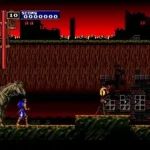
Play Juuouki – Altered Beast online! It is one of the top-rated NEC PC Engine CD games you can play for free. No download, emulator, or setup required—jump straight into the action directly in your browser and start playing this classic in seconds.
Rediscovering a Classic: The Gameplay of Juuouki
Juuouki carved its niche in the world of retro gaming through its unique blend of side-scrolling action and animal transformation mechanics. Players control a resurrected hero tasked with saving a kidnapped princess, battling through hordes of mythical creatures. The core gameplay revolves around the ability to transform into powerful beasts, enhancing not only combat effectiveness but also introducing puzzle-solving elements. Its cooperative two-player mode allowed friends to tackle challenges together, fostering a sense of camaraderie and competition. However, the game’s notorious difficulty remains a talking point, with many players recalling the challenge of mastering movements and combat strategies required to progress.
A Historical Perspective: Juuouki’s Launch and Reception
Originally released in 1988 by Sega, Juuouki was not just a game; it was a technological marvel of its time. The arcade version boasted stunning graphics for its era, drawing players in with vibrant colors and detailed character designs. Its innovative use of the Sega System 16 hardware allowed for seamless sprite animations, which were groundbreaking at the time. The game quickly gained popularity, leading to its port to the Sega Mega Drive, where it found a new audience. Critics praised its distinct art style and engaging soundtrack, solidifying its status as a classic. Over the decades, Juuouki has been celebrated in gaming circles and remains a beloved title for retro enthusiasts.
Impact on Gaming Culture and Legacy
The enduring legacy of Juuouki is evident in its influence on numerous titles that followed. Its themes of resurrection and transformation contributed to the narrative frameworks seen in later action games. The game also spawned a franchise, including reboots and adaptations, illustrating its lasting appeal. Additionally, Juuouki is often featured in retrospectives celebrating the golden age of arcade gaming, reminding newer generations of the innovative spirit of the late ’80s. The nostalgia attached to this title continues to bridge gaps between players, creating a community united by shared experiences and memories.
In conclusion, Juuouki stands as a testament to the creativity and innovation of early video games. Its challenging gameplay, coupled with its unique art and music, ensures that it secures a special place in gaming history. As more players rediscover its charm, the game remains an essential chapter within the larger narrative of video game evolution, celebrated not just for its technical achievements but also for its cultural resonance.