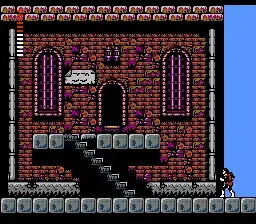
Play Castlevania II English Re-translation (+Map) online! It is one of the top-rated Nintendo Entertainment System games you can play for free. No download, emulator, or setup required—jump straight into the action directly in your browser and start playing this classic in seconds.
Unearthing the Legacy of Castlevania II
The enduring appeal of Castlevania II can be largely attributed to its intriguing blend of exploration and horror elements wrapped in a nostalgic 8-bit aesthetic. Released in 1987 for the Famicom and later for the NES, this title showcased a leap in gameplay mechanics for the franchise, offering players a semi-open-world environment that encouraged exploration over straightforward linearity. The game’s ambitious approach laid the groundwork for future titles in the series, cementing its status as a cult classic.
Gameplay Mechanics and Unforgiving Challenges
In stark contrast to its predecessor, the design of Castlevania II favored a more exploratory gameplay experience, enabling players to navigate the eerie landscapes of Transylvania. The uniqueness of the gameplay mechanics, including day/night cycles and non-linear quests, set the stage for emotional player engagement. However, the game is notorious for its difficulty level, requiring players to decipher cryptic clues and explore every corner of its vast world—a challenge that left many gamers frustrated yet captivated. The mechanics pushed players to think creatively and strategically, often leading to memorable ‘Eureka!’ moments when they solved intricate puzzles.
The Cultural Impact
Castlevania II’s influence far transcended its initial release. It stood as an archetype for the action-adventure genre and inspired a wave of similar titles. The emotional weight of its soundtrack and atmospheric graphics contributed to its lasting legacy, making it a favorite among gamers who cherish retro aesthetics. Moreover, the game’s unique approach to storytelling and world-building paved the way for future iterations, garnering a devoted fan base dedicated to its exploration.
Why the Game Remains a Classic
Nearly four decades later, Castlevania II continues to be celebrated for its innovative mechanics and rich narrative. The emergence of fan-led projects, including re-translations and detailed maps, showcases the love and dedication this game has inspired in the gaming community. Many players relish revisiting the game, appreciating the challenge it presents and the nostalgia it evokes. Furthermore, its iconic status has led to various adaptations, including remakes and merchandise, further embedding it in the fabric of gaming culture.
In conclusion, the legacy of Castlevania II is one of innovation and challenge, merging exploration with a rich narrative that continues to resonate with gamers today. As fans revisit its pixelated landscapes and haunting melodies, the game’s enduring charm remains unspoiled, reminding us of the golden age of retro gaming.