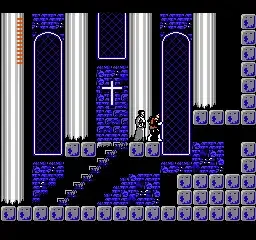
Play Castlevania II – Simon’s Quest (Europe) online! It is one of the top-rated Nintendo Entertainment System games you can play for free. No download, emulator, or setup required—jump straight into the action directly in your browser and start playing this classic in seconds.
Core Gameplay Mechanics and Difficulty
Castlevania II introduced players to a unique blend of action platforming and RPG elements that set it apart from its predecessor. Unlike the linear play style of the original, this title encouraged exploration through a large, interconnected world populated with enemies, items, and secrets. Players assume the role of Simon Belmont, who embarks on a quest to remove the curse placed on him by Dracula. The game’s renowned difficulty stems from its obscure quest mechanics, where players must decipher clues and interact with non-playable characters to progress.
One notable aspect is the day-night cycle, which affects enemy behavior and gameplay dynamics. By day, monsters are less aggressive, while at night, they become more formidable. This mechanic enhances strategic planning, compelling players to adapt their approach depending on the time of day.
Historical Release Background
Released in Europe in 1987, Castlevania II marked a significant evolution in video game design during an era of growing exploration-based titles. Its release followed the success of the original Castlevania and represented a pioneering shift towards open-world design in a time when most games were still restrained by linear narratives. The game’s intricate level design and emphasis on atmospheric storytelling captured the imagination of players, establishing a strong fanbase that continues to thrive today.
Additionally, the soundtrack, composed by Kenichi Matsubara, played a crucial role in garnering appreciation. The haunting melodies not only enriched the game’s eerie ambiance but also contributed to the overall storytelling experience, ensuring its legacy in the gaming industry.
Cultural Impact and Long-Term Legacy
The influence of Castlevania II on the gaming landscape is profound. It laid the groundwork for future entries in the franchise and inspired countless titles within the action RPG genre. The incorporation of exploration mechanics coupled with the need for player interaction set a precedent that many modern games still follow.
Moreover, its compelling story and character progression resonate with players, elevating it to a classic status. Retro gaming enthusiasts and newcomers alike cite it as an essential experience as it embodies the spirit of classic gaming while challenging players to think critically. The game remains a staple in discussions about the golden age of video games.
In conclusion, Castlevania II stands as a testament to innovative game design and cultural relevance in gaming history. Its combination of challenging mechanics, rich atmosphere, and exploration-driven gameplay not only set it apart from its contemporaries but also cemented its legacy for future generations. Fans and new players continue to cherish the game, ensuring that Simon’s quest remains a revered chapter in the ever-expanding world of retro gaming.