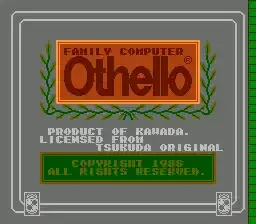
Play Family Computer Othello (Japan) online! It is one of the top-rated Nintendo Entertainment System games you can play for free. No download, emulator, or setup required—jump straight into the action directly in your browser and start playing this classic in seconds.
Gameplay Mechanics and Difficulty
At its core, Othello combines strategic depth with accessibility, making it an engaging experience for both casual and serious players. The game revolves around an 8×8 board where players take turns placing their pieces, aiming to outmaneuver their opponent by flipping their discs. The goal is to dominate the board with the majority of your color at the end. The simplicity of rules makes it easy to pick up, yet mastering the game requires intricate planning and foresight. As you play, you’ll find that each move opens new avenues for strategy, demanding both critical thinking and adaptability, which can make winning easier for some but challenging for others.
Historical Background and Release Impact
First introduced in Japan in the 1980s, Othello quickly gained popularity and became a staple in family gaming. Its launch followed the success of the original board game, created by Gyokuon Co. in the 1970s. The Family Computer version marked a significant step in gaming, transitioning a classic strategy game from tabletop to the digital realm. This adaptation utilized the console’s capabilities to introduce new features such as AI difficulty settings, thus enriching the gameplay experience. The move not only provided immediate access to players but also set the stage for various future iterations, contributing to the ongoing fascination with strategic board games in digital formats.
Technical Innovations
The Family Computer version of Othello was notable for its use of vibrant graphics and smooth animations, enhancing visual appeal. The sound design also played a crucial role, immersing players in the game with satisfying audio cues when pieces were flipped or placed. These technical innovations helped to create a more engaging and enjoyable experience, solidifying its place within the history of home console gaming.
Cultural Legacy and Modern Remembrance
Today, Othello is remembered not just as a game but as a cultural icon in Japan and beyond. Its ability to bridge generational gaps is particularly noteworthy; families continue to enjoy the game, often introducing it to younger players. Various tournaments and online communities celebrate the game, fostering a sense of camaraderie among enthusiasts. Whether you’re reliving childhood memories or discovering it for the first time, Othello remains a compelling testament to strategic thinking and fun, ensuring its relevance even decades after its initial release.