
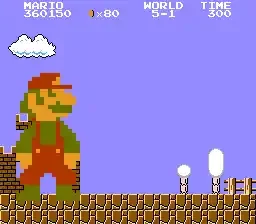






In the annals of video game history, few titles loom as large or cast as long a shadow as the one that redefined an entire industry. Released in 1985 for the Nintendo Entertainment System (NES), **Super Mario Bros.** wasn’t just a game; it was a cultural phenomenon, a masterclass in design, and the foundational blueprint for an entire genre. Its impact was, quite simply, mega and giant, cementing its place as an undeniable classic that continues to resonate with generations of players, from seasoned veterans to curious newcomers.
The Genesis of a Giant: Gameplay and Historical Context
At its core, Super Mario Bros. presented a deceptively simple premise: guide the plumber Mario (and his brother Luigi in two-player mode) through the Mushroom Kingdom to rescue Princess Peach from the villainous Bowser. Yet, beneath this veneer lay a revolutionary gameplay experience. Shigeru Miyamoto and Takashi Tezuka crafted a world brimming with tight, responsive controls, innovative power-ups like the Super Mushroom and Fire Flower, and a groundbreaking sense of horizontal scrolling. Players learned through discovery, navigating treacherous gaps, dodging Goombas and Koopa Troopas, and uncovering hidden Warp Zones. The game’s difficulty, while challenging, felt fair, encouraging persistence and mastery rather than frustration.
A Masterclass in Design Principles
The brilliance of Super Mario Bros. extends to its subtle yet effective tutorialization. The very first screen teaches players to move, jump, and interact with blocks without a single line of text. The game’s 32 levels, spread across eight worlds, introduced new mechanics and enemies progressively, ensuring a constant learning curve. This intuitive design, coupled with Koji Kondo’s iconic soundtrack, created an immersive and endlessly replayable adventure. As an NES classic, it was instrumental in revitalizing the video game market after the crash of 1983, proving that home consoles could deliver deep, engaging experiences.
Beyond the Screen: Cultural Impact and Enduring Legacy
The release of Super Mario Bros. didn’t just sell consoles; it created an icon. Mario quickly transcended the digital realm, becoming Nintendo’s mascot and one of the most recognizable characters worldwide. The game established the fundamental vocabulary of the platformer genre, influencing countless titles that followed. Its level design principles, secret areas, and power-up mechanics became industry standards. From speedrunning communities pushing the limits of its code to nostalgic players revisiting its pixelated landscapes, the game’s cultural footprint is immense. It’s not just a game; it’s a shared cultural touchstone.
Why It Still Resonates Today
Decades later, Super Mario Bros. remains a benchmark for game design and pure fun. Its accessibility means anyone can pick it up and understand the objective, while its depth provides endless challenges for those seeking to master every jump and secret. It represents a simpler time in gaming, yet its mechanics are timeless. This Mario’s debut continues to be celebrated for:
- Timeless Gameplay: Responsive controls and intuitive design that never feel dated.
- Iconic Characters: Mario, Luigi, Peach, and Bowser are instantly recognizable.
- Memorable Music: Koji Kondo’s soundtrack is one of gaming’s most famous.
- Historical Significance: A platforming pioneer that saved an industry.
- Replayability: Hidden secrets and speedrunning potential keep players coming back.
It’s a testament to its perfect blend of innovation and execution that this game continues to captivate new audiences.
From its groundbreaking gameplay to its unparalleled cultural impact, this title stands as a colossal achievement in entertainment. It didn’t just set a new standard for video games; it defined an era, introduced a beloved character to the world, and laid the groundwork for countless adventures to come. Its legacy is a vibrant tapestry woven into the fabric of gaming, ensuring that its “mega giant” status is not just historical, but eternally relevant.
He visto un gameplay y eso me motivo a jugarlo
I am MEGA SUPER Mario Bros parce que il est invincible
This is pretty fun. It seems pretty easy, but it’s still a challenge.
hahaha I’ve never played this version of this game either. It’s really fun