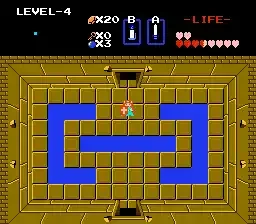
Play The Legend of Zelda – Play as Zelda online! It is one of the top-rated Nintendo Entertainment System games you can play for free. No download, emulator, or setup required—jump straight into the action directly in your browser and start playing this classic in seconds.
The Gameplay Mechanics of Zelda
The 1986 release of The Legend of Zelda revolutionized the action-adventure genre with its innovative gameplay mechanics. Players explore the vast and interconnected land of Hyrule, a realm filled with dungeons, vast landscapes, and various enemies. Unlike typical games of its time, which focused on linear progression, **Zelda** introduced a non-linear approach, encouraging players to discover items, solve puzzles, and defeat adversaries at their own pace.
This exploratory gameplay allows players to engage with the environment in a much more intuitive way, emphasizing problem-solving and critical thinking. Collecting items, such as the iconic Master Sword and various shields, is essential for character progression and unlocking new areas. The challenging difficulty, paired with cryptic clues, creates a sense of accomplishment that has become a hallmark of the series. For many, this adjusted difficulty elevates the experience, distinguishing it from its contemporaries and solidifying its place in gaming history.
A Historical Perspective on Release and Impact
Upon its release in Japan, The Legend of Zelda marked a significant achievement in gaming with its blend of exploration and adventure. Developed by Nintendo and designed by Shigeru Miyamoto, the game was groundbreaking for its time, featuring a battery-backed save system that enabled players to resume their journeys without losing progress. This was a game-changer in an era dominated by single-session gameplay.
The cultural impact did not stop with its 8-bit origins. Over the years, **Zelda** has evolved through various sequels and spin-offs, each bringing new elements of story and gameplay, maintaining relevance in a rapidly changing gaming landscape. The series has inspired countless other game developers, creating a legacy that transcends generations. With merchandise, animated adaptations, and even orchestral concerts, the influence of Zelda on both popular culture and the gaming industry is undeniable.
Lasting Legacy
The enduring appeal of The Legend of Zelda lies in its ability to engage players of all ages. It continues to resonate through modern titles that borrow its themes of exploration, adventure, and intricate puzzles. Fans frequently reminisce about their first journeys through Hyrule, showcasing how **Zelda** has carved its niche in the hearts of gamers.
In summary, the exceptional gameplay mechanics, rich history of innovations, and profound cultural impact ensure that The Legend of Zelda remains a beloved icon long after its debut. As new generations discover **Zelda**, its legacy as a cornerstone of the gaming world will continue to thrive.