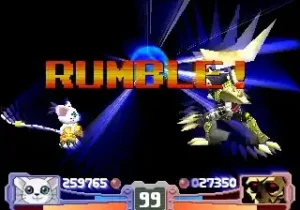
Play Digimon Rumble Arena online! It is one of the top-rated PlayStation PSX games you can play for free. No download, emulator, or setup required—jump straight into the action directly in your browser and start playing this classic in seconds.
Exploring the Core Gameplay Mechanics
Digimon Rumble Arena stands out in the fighting game genre due to its unique gameplay mechanics and blend of characters, taking players on a nostalgic trip down memory lane. Unlike traditional fighters, this game leverages the beloved Digimon franchise, where players can select from an array of iconic creatures, each with distinctive moves and abilities. The game supports up to four players in intense, chaotic battles, emphasizing cooperative as well as competitive gameplay.
The controls are straightforward, which makes picking up and playing smooth and engaging. Players can combine attacks, unleash signature moves, and even perform special Digivolutions, adding depth to the fights. Difficulty levels vary, and as players progress, they encounter increasingly tough AI opponents, ensuring that mastering each Digimon’s abilities becomes critical for success. This blend of easy learning curves and challenging gameplay contributes to its lasting appeal among fans.
A Glance at Historical Release and Cultural Impact
Released in 2001 for the PlayStation, **Digimon Rumble Arena** came during a pivotal era for video games that married established franchises with innovative combat systems. At a time when 3D fighters were gaining momentum, this title carved a niche by inviting fans of the anime and card game to step into the digital arena. It quickly garnered attention for its vibrant graphics and engaging gameplay, likely aiding in its status as a cult classic.
This game is more than just a nostalgic trip; it played a considerable role in shaping the future of party and competitive fighting games. By incorporating familiar characters and lore, it attracted both hardcore gamers and casual players alike. Its cultural relevance extended beyond mere entertainment, fostering community gatherings and multiplayer experiences that echoed the camaraderie of other beloved franchises.
The Long-Lasting Legacy of Digimon Rumble Arena
The impact of **Digimon Rumble Arena** reaches far beyond its initial release. It laid the groundwork for future installments and spin-offs, establishing a reliable formula for crossovers in the gaming world. Today, the title is often revisited with fondness, especially by those who grew up in the early 2000s. For many, the vibrant visuals and catchy soundtrack evoke cherished memories of gaming sessions with friends.
In conclusion, the nostalgia surrounding **Digimon Rumble Arena** persists in the hearts of gamers and die-hard franchise fans. The engaging mechanics, combined with its historical significance and ability to unite players, ensure that this classic remains a favorite in retro gaming discussions. Whether reliving moments from childhood or exploring the title for the first time, it continues to resonate across generations.