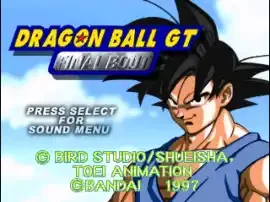
Play Dragon Ball GT – Final Bout online! It is one of the top-rated PlayStation PSX games you can play for free. No download, emulator, or setup required—jump straight into the action directly in your browser and start playing this classic in seconds.
Exploring the Gameplay Mechanics of Dragon Ball GT – Final Bout
Dragon Ball GT – Final Bout is a fascinating entry in the realm of fighting games that captures the essence of the beloved franchise. Released in 1997 exclusively for the PlayStation, this game features a unique blend of traditional fighting mechanics combined with special moves that resonate with fans of the anime. Players engage in dynamic battles using a variety of characters, each equipped with their own special abilities, making every fight feel distinct. Though the gameplay is relatively simple, mastering combinations and timing can present a significant challenge, especially for newcomers who may find the learning curve steep.
The Historical Significance of Dragon Ball GT – Final Bout
In the late 1990s, the anime landscape was evolving rapidly, and Dragon Ball GT – Final Bout emerged as an essential title for fans eager to experience their favorite characters in an interactive format. While it wasn’t without its flaws, such as limited character roster compared to later games, its impact was felt widely. The game introduced a new fighting system that allowed players to engage in aerial combat, a feature that was relatively novel at the time. Moreover, the graphics, albeit simplistic by today’s standards, were a cutting-edge representation of the Dragon Ball universe, providing fans with a sense of immersion that was previously unattainable in home console gaming.
Features That Made an Impact
- Unique combination of aerial and ground combat
- Diverse character roster with individual special moves
- Two-player mode that enhanced replay value
The ability to play with a friend added another layer of enjoyment, turning it into a social experience. Players quickly became experts at using their favorite characters, replicating iconic moves from the show. This made the game not just an entertainment product but a cultural touchstone for fans who wanted to emulate their heroes, creating lasting memories.
Conclusion
Dragon Ball GT – Final Bout remains a cherished piece of gaming history, remembered for its ambitious gameplay and its role in the evolution of anime-based video games. While it may not have achieved the critical acclaim of its successors, its legacy lies in its innovation and the nostalgia it evokes for a generation of gamers. Even today, it captures the hearts of fans and reminds them of the early days of 3D fighting games, proving that some titles leave an indelible mark that lasts beyond their initial release.