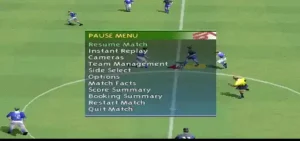
Play FIFA 2000 online! It is one of the top-rated PlayStation PSX games you can play for free. No download, emulator, or setup required—jump straight into the action directly in your browser and start playing this classic in seconds.
Gameplay Mechanics and Difficulty
FIFA 2000 brought a fresh approach to football simulation by integrating a variety of gameplay mechanics that appealed to both casual gamers and dedicated fans of the sport. The controls became notably more intuitive, allowing players to execute intricate maneuvers like skill moves and tactical formations. Goals felt rewarding, thanks to a more responsive physics engine that enhanced ball movement. The introduction of smaller, more agile players added depth, requiring new strategies to capitalize on speed and agility.
However, the game was not without its challenges. The AI was often unpredictable, creating scenarios that could frustrate even the most seasoned players. Balancing difficulty was a defining aspect, with matches sometimes swaying between closely contested and overly easy, leaving players longing for a more consistent experience. Nonetheless, the engaging gameplay loop kept players coming back for more excitement and competition.
Historical Release Background and Innovations
Launched in 1999, FIFA 2000 marked a pivotal moment in the franchise, showcasing the evolution of sports games during that era. It released on multiple platforms, including the PlayStation, Nintendo 64, and PC, which significantly broadened its accessibility. This installment introduced several notable innovations, such as licensed teams and leagues, which enhanced the authenticity of the match experience. For the first time, gamers could play with teams from various countries, forming their dream squads with real-life players.
Technical advancements, including upgraded graphics and smoother animations, showcased the capabilities of the consoles at the time. The game also emphasized the importance of sound design, with commentary that resonated with players, adding to the overall immersion. These elements combined to create a groundbreaking experience that resonated well beyond its launch window.
Cultural Impact and Long-Term Legacy
The significance of FIFA 2000 in the landscape of gaming cannot be understated. It helped to popularize football videogames and laid the groundwork for future entries in the franchise. Often remembered for its nostalgic value, the title is a cherished memory for gamers who played it in their youth, forming a connection that transcends generations.
This cultural impact is evident today, with remixes of its iconic soundtrack and references in modern media, encapsulating the essence of gaming nostalgia. Historically, FIFA 2000 stands as a benchmark, influencing how sports titles would be developed moving forward.
Conclusion
In summary, FIFA 2000 represents a watershed moment in both football gaming and the broader gaming landscape. Its innovative gameplay mechanics and rich historical context have created a lasting legacy that resonates with many. By embracing the essence of football while pushing technological boundaries, the game remains a memorable chapter in the hearts of fans. Today, it serves as a reminder of how far the genre has come, and why it will always hold a special place in gaming history.