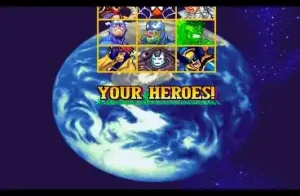
Play Marvel vs. Capcom – Clash of Super Heroes – EX Edition (Japan) online! It is one of the top-rated PlayStation PSX games you can play for free. No download, emulator, or setup required—jump straight into the action directly in your browser and start playing this classic in seconds.
Gameplay Mechanics and Challenge
The game remains a landmark in the crossover fighter genre, combining beloved characters from two massive franchises: Marvel and Capcom. The core mechanics revolve around team-based combat, allowing players to select a duo of characters for battles, which leads to dynamic gameplay strategies. Players can execute powerful combo chains, utilizing each character’s unique abilities and strengths to outmaneuver their opponents. The **difficulty level** ramps up as skills progress, making mastering character combinations essential for victory. The ability to call in a partner for assists provides a strategic layer that has become a signature feature in many fighting games modernized after this classic.
Historical Release Background
Originally launched in Japan, the game made waves in arcades upon its release in 1998. It stood out for its vibrant, hand-drawn graphics and a catchy soundtrack, both of which enhanced the overall experience. Notably, this title was a sequel to the previous entries in the series, leveraging existing mechanics while introducing new elements that rejuvenated interest among gamers. Its success in arcades prompted a home console release, making it accessible to a broader audience. This well-timed release allowed it to capture the nostalgia of fans while introducing new players to the thrill of team battles. Even two decades later, the game is celebrated for its striking visuals and engaging combat.
Cultural Impact and Legacy
The lasting impact of this game is undeniable, as it not only bridged the gap between two worlds, but also helped to cultivate a vibrant community of fighting game enthusiasts. Icons such as Wolverine and Ryu became mainstays in competitive gaming, fostering a sense of rivalry and camaraderie within the scene. Many modern fighting games still draw influence from its innovative teamwork mechanics and character diversity. Events around the world often feature it as a nostalgic favorite, celebrating and preserving its legacy in gaming culture.
In conclusion, the evolution sparked by this classic title remains influential in the gaming industry. Its pivotal role in shaping competitive fighting games is matched by an enduring love from fans, who continue to celebrate its unique blend of characters and exhilarating gameplay. It’s not just a game; it’s a cultural phenomenon that paved the way for numerous successors and remains a cherished memory for many gamers even today.