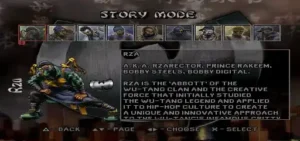
Play Wu-Tang – Shaolin Style online! It is one of the top-rated PlayStation PSX games you can play for free. No download, emulator, or setup required—jump straight into the action directly in your browser and start playing this classic in seconds.
Core Gameplay Mechanics and Difficulty
Wu-Tang delivers a fascinating blend of fighting game mechanics that resonates with fans of the genre. Designed for the PlayStation, this title combines intense one-on-one combat with intricate combo systems, giving players both a challenge and an adrenaline rush. Each character, inspired by members of the iconic hip-hop group, possesses unique martial arts styles and signature moves, adding depth to the combat experience. The various arenas, often inspired by traditional Asian settings, further enhance the gameplay, presenting players with interactive environments.
The game features an intricate difficulty curve that ramps up as players progress through the story mode. This challenge not only tests the player’s skill but also promotes mastery of each character’s fighting style. As a result, players engage deeply with the mechanics, spending hours perfecting their combos and strategies to defeat tougher opponents. The inclusion of hidden characters and unlockable content adds to its replayability, ensuring players continuously seek mastery.
Historical Release Background
Released in 1999, this title was not just another fighting game on the market; it marked a significant milestone in video game history by integrating hip-hop culture into gaming. At a time when fighting games were dominated by franchises such as *Mortal Kombat* and *Street Fighter*, the game captured the essence of the ’90s hip-hop scene and introduced players to a fusion of music, culture, and gameplay. Developed by Paradox Development, it was one of the first games to feature a predominantly Black cast of characters, bringing cultural representation to the forefront of game design.
The game received mixed reviews upon release, praised for its innovative concept and character designs, yet criticized for its graphics and overall execution. Despite its imperfections, the game holds a nostalgic value for many who remember the era of early 3D fighting games and the rise of hip-hop culture in mainstream media. Over the years, it has gained a cult following, celebrated not only for its gameplay but also for portraying the persona of one of hip-hop’s most influential groups.
Cultural Impact and Long-term Legacy
The legacy of this fighting game extends far beyond its original release. It encapsulates a moment in time when hip-hop began to infiltrate popular culture in diverse ways. From merchandise to soundtracks, the influence of the game was felt across various forms of media. It remains a celebrated piece of nostalgia for gamers and hip-hop enthusiasts alike, showcasing the potential of games as cultural artifacts.
In conclusion, the enduring charm of Wu-Tang lies in its innovative fusion of martial arts and hip-hop culture. The game not only carved a niche within the fighting genre but also left a lasting impact on how video games could represent music and culture. With its unique character roster and engaging gameplay mechanics, it continues to be remembered fondly by those who experienced its release. The legacy of this game endures, reminding players of the vibrant intersection between gaming and cultural expression.