
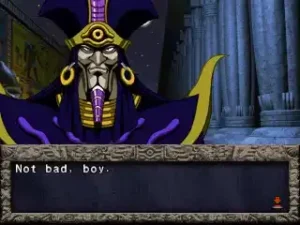




The world of Yu-Gi-Oh! has captivated millions, evolving from a manga to a global trading card game phenomenon and numerous video game adaptations. Among its earliest and most distinctive digital incarnations stands Yu-Gi-Oh! Forbidden Memories, a PlayStation 1 title released in 2002. Far from a direct simulation of the burgeoning TCG, this game carved its own path, offering a unique blend of ancient Egyptian lore, simplified yet challenging card mechanics, and an infamous grind that cemented its place in retro gaming history. It remains a fascinating, if sometimes frustrating, entry that continues to spark nostalgic discussions among fans.
Gameplay Mechanics & Unforgiving Difficulty
Unlike its tabletop counterpart, Forbidden Memories PS1 presents a streamlined, almost primal, version of card battling. Players begin with 2000 Life Points and duel on a simple 3×2 field, where monster types (e.g., Dark, Light, Earth) and their elemental matchups play a crucial role in determining attack and defense power. The game eschews complex card effects, tributes, and dedicated spell/trap zones, focusing instead on raw monster stats and the innovative fusion system. This simplification, however, belies a brutal difficulty curve. Opponent decks often feature incredibly powerful cards early on, forcing players to strategize with limited resources and master the art of fusion to stand a chance.
The Fusion System & Deck Building
The heart of Yu-Gi-Oh! Forbidden Memories‘ gameplay lies in its unique fusion mechanic. Players can attempt to fuse any two monsters in their hand, often resulting in unexpected combinations. While some fusions follow logical recipes (e.g., Dragon + Spellcaster = Dragon Zombie), many are obscure, requiring extensive experimentation or external guides. This system encourages creative deck building, as players must consider not just individual card strength but also their potential to combine into more formidable creatures. Mastering these fusions is paramount, as it’s often the only way to overcome the AI’s stacked decks.
RNG and the Grind
A defining characteristic of this Yu-Gi-Oh! PS1 game is its notorious card drop system. Winning duels against specific opponents is the primary method for acquiring new cards, but the drops are heavily reliant on random number generation (RNG). Players might spend dozens, even hundreds, of duels against a single opponent, hoping for a specific rare monster or spell card. This immense grind, while frustrating, became an integral part of the game’s identity, fostering a sense of accomplishment when a coveted card finally dropped. It extended gameplay hours significantly and contributed to the game’s legendary difficulty.
A Journey Through Ancient Egypt: Historical Context
Released during the peak of the Yu-Gi-Oh! anime’s popularity, Yu-Gi-Oh! Forbidden Memories took a bold narrative approach. Instead of directly adapting the Battle City arc or other contemporary storylines, it plunged players into an original tale set in ancient Egypt. Players assume the role of the unnamed Pharaoh, a direct ancestor of Yugi Muto, battling against dark forces and uncovering the secrets of the Millennium Items. This historical backdrop resonated deeply with fans, connecting the modern card game to its mystical origins depicted in the anime’s lore. It provided a compelling, standalone experience that expanded the Yu-Gi-Oh! universe in a fresh way, predating many of the more TCG-accurate console titles.
Lasting Legacy & Cultural Resonance
Despite its quirks and punishing difficulty, Yu-Gi-Oh! Forbidden Memories holds a special place in the hearts of many retro gamers. Its unique take on the Yu-Gi-Oh! formula, coupled with its engaging ancient Egyptian narrative, created a memorable experience distinct from other entries. The sheer challenge and the satisfaction of overcoming its formidable AI opponents fostered a dedicated community, even years after its release. It’s a game that taught players resilience and the value of strategic fusion, even if those strategies didn’t directly translate to the real-world TCG.
- Unique Gameplay: Simplified rules and a deep fusion system set it apart.
- Challenging AI: Forced players to adapt and grind for powerful cards.
- Nostalgic Appeal: A beloved entry from the golden age of PS1 gaming.
- Original Story: Explored the ancient Egyptian lore of the Yu-Gi-Oh! universe.
Its enduring appeal is evident in online discussions, speedrunning attempts, and fan-made guides that continue to explore its intricate fusion mechanics and optimal grinding strategies. It stands as a testament to how a game, even with its flaws, can captivate an audience through distinct design and a memorable challenge.
Yu-Gi-Oh! Forbidden Memories remains an iconic, if polarizing, entry in the franchise’s video game lineage. Its departure from traditional TCG rules, combined with its innovative fusion system and infamous grind, forged a truly unique experience on the PlayStation 1. For many, it wasn’t just a game, but a challenging journey into the ancient origins of dueling, solidifying its status as a beloved retro title that continues to be discussed and remembered fondly by a dedicated fanbase.
great