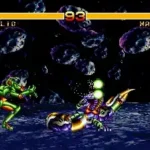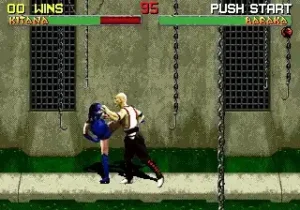
Play Mortal Kombat II (Japan, USA) online! It is one of the top-rated SEGA 32X games you can play for free. No download, emulator, or setup required—jump straight into the action directly in your browser and start playing this classic in seconds.
Gameplay Mechanics and Difficulty
Mortal Kombat II revolutionized fighting games with its intricate gameplay mechanics and heightened difficulty. Players found themselves immersed in intense battles that required strategy, precision, and timing. The game featured a roster of iconic characters, each with unique moves and fatalities, setting the stage for fierce competition. The combo system, introduced in this sequel, added depth, allowing players to chain attacks and unleash devastating combos. This innovation not only enhanced the gaming experience but also set a standard for future fighting games.
The challenge level in Mortal Kombat II is noteworthy. Players faced increasingly difficult opponents, pushing them to master their character’s abilities. Many gamers remember the sense of elation accompanied by a hard-fought win against a particularly tough adversary, solidifying the game’s commitment to being a true test of skill.
Historical Release Background
Mortal Kombat II was initially released in arcades in 1993, quickly achieving immense popularity. It was a direct successor to the original Mortal Kombat, addressing various critiques and enhancing user experience. The game saw an expansion to home consoles, including the Super Nintendo and Sega Genesis, introducing a broader audience to its visceral combat and dramatic finishers.
This installment introduced improved graphics, offering more fluid animations and detailed environments. Players were captivated by the rich, dark aesthetic that combined fantasy elements with martial arts, directly influencing the gaming landscape. As one of the most successful arcade games of its time, it contributed significantly to the fighting genre’s evolution and remains a benchmark for quality.
The Cultural Impact and Legacy
The cultural impact of Mortal Kombat II cannot be overstated. It sparked debates about violence in video games that continue to resonate. The game’s iconic characters, especially Scorpion and Sub-Zero, have become emblematic figures, representing not just the franchise but also an era of gaming that embraced bold narratives and character-driven stories.
Today, the legacy of Mortal Kombat II is evident in numerous adaptations, from a film franchise to merchandise. Its innovations paved the way for modern fighting games, making it a revered classic that still attracts fans, both nostalgic and new.
In conclusion, Mortal Kombat II stands as a landmark title in the history of video gaming. Its combination of innovative gameplay, challenging mechanics, and cultural significance ensures it remains a beloved classic. As new generations discover this iconic game, its legacy as a pioneer in the fighting genre continues to thrive.