
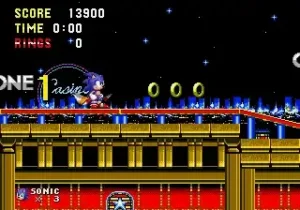
Play Sonic The Hedgehog 4 online! It is one of the top-rated SEGA Genesis games you can play for free. No download, emulator, or setup required—jump straight into the action directly in your browser and start playing this classic in seconds.
## The Quest for Classic Speed: Revisiting a Divisive Digital Revival
For years, fans of Sega’s iconic blue blur yearned for a true successor to the beloved 2D adventures of the 16-bit era. The world had seen Sonic transition into 3D, with varying degrees of success and fan reception. Yet, the desire for a pure, unadulterated side-scrolling experience, echoing the glory days of the Sega Genesis, remained a burning ember. In the late 2000s, Sega announced an answer to these fervent prayers: a direct continuation of the classic saga, designed from the ground up to evoke that cherished retro feel.
This ambitious project promised to bridge the gap between generations, delivering a fresh take on the lightning-fast platforming that defined a gaming icon. It was a digital-only release, split into two distinct episodes, each aiming to recapture the magic while introducing subtle modern flourishes. The anticipation was palpable, the expectations sky-high. Was this the true follow-up fans had dreamt of for nearly two decades? Let’s dive into the legacy of this fascinating, often debated, chapter in gaming history.
### A Bold Return to Form: The Genesis of the Idea
The landscape of the franchise in the late 2000s was a complex tapestry of innovation and experimentation. While 3D entries like *Sonic Adventure* had their champions, and others like *Sonic Unleashed* offered glimpses of brilliance, many purists felt the series had strayed too far from its roots. The clamor for a genuine 2D successor, one that honored the precise physics and intricate level design of the Genesis classics, grew louder with each passing year.
#### The Landscape of Sonic in the Late 2000s
By the turn of the millennium, the franchise had diversified considerably. From racing games to RPGs, the hedgehog had explored many genres, but the core 2D platforming experience had largely been relegated to handheld ports or nostalgic compilations. Fans frequently debated online about what constituted “true” classic gameplay, often pointing to the specific feel of the Spin Dash, the momentum-based physics, and the intricate multi-path level design of the original trilogy. Sega, acutely aware of this passionate discourse, saw an opportunity to deliver exactly what a significant portion of its fanbase desired.
#### Development and Anticipation
Development for this episodic adventure began with the explicit goal of recreating the classic feel. It was designed to be a direct sequel to the events of *Sonic 3 & Knuckles*, picking up after the defeat of Dr. Eggman. The reveal trailer, showcasing familiar environments and a renewed focus on speed, ignited a firestorm of excitement. The “Episode” structure was a modern approach to content delivery, promising regular updates and a sustained narrative. Fans eagerly dissected every screenshot and video, hoping to catch a glimpse of the classic physics and art style they held so dear. The promise was clear: this was to be the ultimate retro revival, a true return to the franchise’s glorious 2D origins.
### Unpacking the Gameplay: A Modern Take on a Classic Formula
When the first episode finally arrived, players were met with a familiar yet distinctly different experience. It was an homage, a recreation, but also a product of its time, blending old and new in ways that would spark endless discussion.
#### Familiar Zones, Fresh Challenges
The level design immediately struck a chord with long-time fans. The zones, while entirely new in their layout, drew heavily from iconic environments of the past. Splash Hill Zone echoed Green Hill, while Lost Labyrinth Zone brought back memories of Labyrinth Zone. Each act presented a series of platforming challenges, speed sections, and environmental hazards, culminating in a boss battle against Dr. Eggman in one of his elaborate machines. The visual style, a blend of 2D sprites and 3D environments, aimed for a vibrant, modern aesthetic while retaining the iconic character designs.
#### The Blue Blur’s Moveset
At its core, the blue hero retained his classic abilities: the lightning-fast Spin Dash to build momentum and the iconic jump. However, a significant addition was the Homing Attack, a move first introduced in 3D entries. This ability allowed players to target and home in on enemies or springs mid-air, adding a layer of accessibility and fluidity to combat and traversal. Its inclusion, while streamlining gameplay for some, became a point of contention for others who felt it altered the fundamental flow and challenge of classic 2D platforming, making certain sections less about precise jumps and more about chaining attacks.
#### Physics and Flow: The Heart of the Matter
Perhaps the most debated aspect of the entire experience was its physics engine. Sega aimed to replicate the momentum-based physics of the Genesis era, but many players felt it didn’t quite hit the mark. The character’s acceleration, deceleration, and jump arcs felt subtly different, leading to a sensation that some described as “slippery” or “floaty” compared to the tight, predictable mechanics of the 16-bit classics. This perceived deviation from the original feel became a central point of discussion and critique, as it fundamentally impacted how players navigated the intricate levels and maintained their speed.
#### Episode II Enhancements
The second episode, released a couple of years later, sought to address some of the feedback from the first. It brought back Tails as a playable partner, allowing for cooperative gameplay. Players could utilize Tails’ flight ability to reach higher platforms or combine forces for a powerful rolling attack, reminiscent of the tag-team mechanics in *Sonic 3 & Knuckles*. Visually, the levels were often praised for their vibrant aesthetics, and many felt the physics had been subtly tweaked, offering a slightly more refined experience. The return of Metal Sonic as a recurring antagonist and playable character in bonus content was a huge draw, tapping into deep franchise lore and fan nostalgia.
### Historical Context: A Bridge Between Eras
This episodic adventure holds a unique place in the franchise’s history, representing a significant moment of introspection and response from Sega. It wasn’t just a game; it was a statement.
#### The Weight of Expectation
Positioned as the “true” sequel to the Genesis era, the game carried an immense burden of expectation. Fans had spent years imagining what such a title would entail, and the reality of a modern interpretation, while technically proficient, often clashed with the idealized versions in their minds. It was an almost impossible task to satisfy every fan’s specific vision of a classic comeback, especially when trying to balance that with modern game design sensibilities.
#### Digital Distribution Pioneer
Its release strategy was also notable. Launched primarily as a digital download title on platforms like PlayStation Network, Xbox Live Arcade, iOS, and Android, it embraced the burgeoning digital distribution model of the late 2000s and early 2010s. This approach made it accessible to a wide audience without the need for a physical release, reflecting a significant shift in the gaming industry towards downloadable content and episodic narratives.
#### A Response to Fan Demand
Ultimately, the game stands as a testament to Sega’s willingness to listen to its fanbase. After years of exploring new directions, the company acknowledged the enduring love for the 2D side-scrolling format. While the execution might have been divisive, the intent was clear: to give fans what they had been asking for, demonstrating a desire to reconnect with the series’ foundational principles.
### Enduring Legacy: Why It Still Sparks Conversation
Years after its release, this ambitious project continues to be a subject of intense discussion among enthusiasts. Its impact, though not universally celebrated, is undeniable.
#### The “Physics Debate” That Never Ends
The most enduring aspect of its legacy is undoubtedly the ongoing debate surrounding its physics engine. It became a benchmark, often cited in discussions about what makes a “classic” Sonic game truly feel right. This constant analysis, comparing its feel to the Genesis originals, has inadvertently helped articulate the precise qualities fans cherish in the older titles. In a way, its perceived shortcomings highlighted the brilliance of the original design.
#### A Nostalgic Snapshot
For some, despite its flaws, the game was a welcome return to a beloved style. It offered a glimpse into what a modern 2D entry could look like, even if it wasn’t a perfect recreation. It serves as a nostalgic snapshot of the early 2010s digital gaming landscape, a period when developers were experimenting with how to bring classic franchises into a new era of distribution and design.
#### Its Place in the Sonic Canon
Within the broader timeline of the franchise, this episodic adventure holds a significant, albeit divisive, position. It’s an important entry that represents a pivotal moment: Sega’s first major attempt to directly continue the classic 2D saga after a long hiatus. Its reception undoubtedly influenced subsequent decisions, including the eventual development of titles like *Sonic Mania*, which would take a different approach to retro revival.
#### A Learning Experience for Sega
The development and reception of this game provided valuable lessons for Sega. It underscored the challenges of meeting sky-high fan expectations and the delicate balance required when modernizing a beloved retro formula. The feedback, both positive and critical, contributed to a deeper understanding of what the fanbase truly desires from a 2D experience, paving the way for future projects that would either build upon or depart from its design philosophy.
### A Divisive, Yet Defining, Chapter
The journey of this digital revival is a compelling narrative of ambition, expectation, and the complex art of retro emulation. It aimed to be the true successor to a legendary era, a direct continuation of the classic 2D adventures that captivated a generation. While it may not have achieved universal acclaim, its significance cannot be overstated.
It stands as a testament to Sega’s efforts to reconnect with its roots and answer the fervent calls of its dedicated fanbase. Its gameplay, particularly its physics and the inclusion of the Homing Attack, sparked conversations that continue to echo through the community. Ultimately, this episodic adventure isn’t just a game; it’s a crucial chapter in the ongoing story of a gaming icon, a bold attempt to bridge the past and the present, and a powerful reminder of the enduring allure of classic speed.


That’s Sonic the Hedgehog 2 mod
i was at labyrinith zone
have fun!
i like this