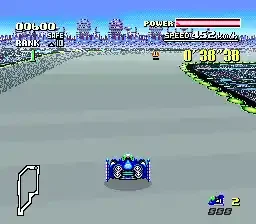
Play F-Zero (USA) online! It is one of the top-rated Super NES games you can play for free. No download, emulator, or setup required—jump straight into the action directly in your browser and start playing this classic in seconds.
Introduction
F-Zero remains a standout title in the annals of retro gaming, captivating players with its fast-paced, futuristic racing since its debut. Released for the Super Nintendo Entertainment System (SNES) in the early ’90s, the game introduced a thrilling blend of speed, strategy, and intricate track design. It wasn’t just another racing game; it was a revolutionary experience that challenged the conventions of its time, setting the stage for future titles in the genre.
Core Gameplay Mechanics and Difficulty
The core gameplay of F-Zero revolves around high-speed hovercraft racing on meticulously crafted tracks. Each vehicle boasts unique attributes, emphasizing a blend of strategy and skill. Players must master tight turns and anticipate obstacles to maintain their advantage. The difficulty is notable; tracks are adorned with hazards and tight corners that demand focus and precision. This ensures that even experienced players face a formidable challenge when striving for victory. The sense of speed, accentuated by the Mode 7 graphics technology of the SNES, created an immersive racing experience that left players breathless.
Historical Release Background
First launched in North America in 1990, F-Zero marked the beginning of a valued franchise that would influence racing games for decades. Developed by Nintendo, the game showcased the capabilities of the SNES, particularly its ability to render 3D environments using 2D sprites. This innovative design approach was groundbreaking, giving players a feeling of depth and speed that was previously unimaginable. The game’s success not only led to sequels and spin-offs but also inspired countless developers to explore the potential of racing games, solidifying its place in gaming history.
Cultural Impact and Long-Term Legacy
F-Zero is not just remembered for its gameplay; it has become a cultural icon within the gaming community. Its memorable characters and exhilarating tracks have appeared in various Nintendo franchises, including Super Smash Bros., keeping the spirit of F-Zero alive for new generations. The game’s influence can also be felt in modern racing games that pay homage to its mechanics and aesthetics. F-Zero’s legacy endures, representing a nostalgic touchpoint for many gaming enthusiasts.
Conclusion
F-Zero stands the test of time as a defining title in the racing genre, thanks to its innovative gameplay, historical significance, and lasting cultural impact. The challenge it presents continues to resonate with players, ensuring that this retro gem remains a beloved classic in the hearts of many. As new players discover its adrenaline-pumping action, F-Zero serves as a reminder of the brilliance of early 90s gaming, captivating audiences both old and new.