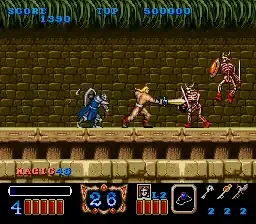
Play Magic Sword (Europe) online! It is one of the top-rated Super NES games you can play for free. No download, emulator, or setup required—jump straight into the action directly in your browser and start playing this classic in seconds.
Exploring the Legacy of Magic Sword
The **Magic Sword** stands as a beacon of early 90s arcade gaming, captivating players with its compelling blend of action and adventure. Released by Capcom in 1990, this game garnered instant recognition for its vibrant graphics and engaging gameplay. Players navigate a fantasy realm filled with diverse enemies, utilizing swords and magic to defeat foes while rescuing captured princesses. Its combination of side-scrolling action and RPG-like elements set it apart from other titles of its time, marking a pivotal moment in gaming history.
Gameplay Mechanics and Challenges
In **Magic Sword**, players assume the role of a brave warrior tasked with fighting through treacherous levels filled with magical creatures and formidable bosses. The core gameplay revolves around the acquisition of various weapons and spells, enhancing the player’s combat experience. Unique to this game is the option to recruit NPC allies, providing strategic advantages against hordes of enemies. This feature not only cultivated teamwork but also added layers of complexity to the otherwise straightforward gameplay. The difficulty level is ramped up as players progress, making it essential to master both combat mechanics and level design, resulting in a rewarding challenge that players often recall fondly.
Innovations and Impact
Capcom’s technical innovations in **Magic Sword** cannot be overstated. The game was notable for its rich pixel art and fluid animation, elevating the aesthetic experience of side-scrolling games. The integration of RPG elements into a traditionally action-centric genre was a pioneering move, influencing countless titles in the years that followed. It serves as a reminder of the evolving nature of video games, where blending genres becomes essential to keeping players engaged.
The Enduring Influence
Today, **Magic Sword** continues to wield influence over game design and player expectations. Its legacy is preserved through remakes and re-releases, attracting both nostalgic gamers and a new audience curious about early arcade classics. The blend of action, strategy, and memorable visuals has earned it a respected place in gaming history. Furthermore, it showcases the rich narrative potential found within arcade gaming, paving the way for future titles that seek to blend storytelling with interactive experiences. The game remains a touchstone for discussions about the evolution of gaming and the foundational mechanics that have shaped modern interactive entertainment.