Play Rockman’s Soccer (Japan) online! It is one of the top-rated Super NES games you can play for free. No download, emulator, or setup required—jump straight into the action directly in your browser and start playing this classic in seconds.
Introduction
Rockman’s Soccer combines the beloved elements of the Mega Man franchise with the excitement of soccer, creating a unique gaming experience that left a lasting mark on the retro gaming scene. Released exclusively in Japan in 1994 for the Super Famicom, this game exemplified the innovative spirit of the time, blending platforming and sports genres in unexpected ways. Players were not just navigating levels but also competing in dynamic, team-based matches, which contributed to its nostalgic charm and enduring appeal in the gaming community.
Gameplay Mechanics and Challenges
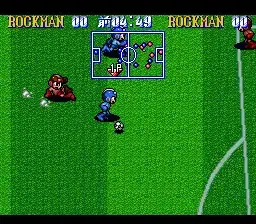
The core mechanics of Rockman’s Soccer revolve around engaging 2D soccer matches featuring characters from the Mega Man universe. Players select a team of iconic robot masters, each equipped with distinct abilities that can influence gameplay. The matches require quick reflexes and strategic use of special moves, pushing players to master both offensive and defensive strategies. The game’s difficulty ramps up significantly, presenting players with challenging opponents that increase with each match, maintaining engagement and excitement. Controls are responsive yet demand precision, ensuring that every goal scored feels hard-earned.
Historical Context and Innovations
Upon its release, Rockman’s Soccer stood out not just for its unique concept but also for its technical innovations. The game utilized the Super Famicom’s graphical capabilities to create colorful and vibrant environments, enhancing the visual appeal of the soccer fields. Moreover, the soundtrack, featuring energetic tunes, perfectly complemented the fast-paced action, adding to the overall immersive experience. In a market where sports games often felt static and formulaic, this title showcased bold experimentation, setting a precedent for future games that would merge different genres creatively.
Cultural Impact and Legacy
Even years after its initial release, Rockman’s Soccer holds a special place in the hearts of fans and retro gaming enthusiasts. It embodied a playful mashup of two popular genres, inspiring countless discussions about innovation in video game design. The game is often remembered in cultural retrospectives and remains a reference point for those who appreciate the quirky fusion of platforming and sports systems. Its vibrant art style and memorable characters continue to resonate, reminding players of a more adventurous era of gaming.
Conclusion
<pAs part of the broader Mega Man franchise, Rockman’s Soccer may not have achieved the same commercial success as its predecessors, but its unique blend of soccer and action offered something refreshingly different. Today, it remains a testament to creativity in the gaming world, sparking nostalgia for those who played it and inspiring new generations of developers to think outside the box. Embracing its innovative spirit allows us to appreciate the advancements in gaming that followed, while also celebrating this charming gem of the 1990s.