Play Shaq Fu (Europe) online! It is one of the top-rated Super NES games you can play for free. No download, emulator, or setup required—jump straight into the action directly in your browser and start playing this classic in seconds.
Introduction
Shaq Fu stands as one of the most iconic titles in retro gaming, often celebrated for its eccentric blend of sports and martial arts. Released in the mid-90s, the game is both loved and criticized, encapsulating a unique chapter in the evolution of video games. As a crossover meant to capitalize on basketball legend Shaquille O’Neal’s popularity, it introduced a quirky art style and combat mechanics that left a lasting impression, albeit a polarizing one.
Core Gameplay Mechanics and Difficulty
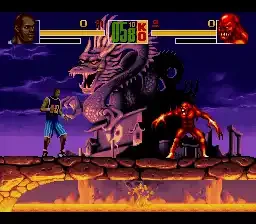
The gameplay in Shaq Fu revolves around its unique martial arts fighting mechanics, where players control Shaquille O’Neal as he battles various bizarre opponents. The controls are relatively straightforward, with a combination of punch and kick commands, along with special moves that can be executed through specific button combinations. However, many players found the difficulty spike challenging, particularly against later bosses who require not just skill but an understanding of the nuanced mechanics that can be less intuitive.
- Simple punch and kick controls
- Unique special moves for each character
- Diverse range of quirky opponents
- Steep difficulty curve for advanced levels
While some players appreciated the learning curve, others found it frustrating, leaving them divided over the game’s overall enjoyment factor.
Historical Background and Cultural Impact
Released in 1994 by Ocean Software for multiple platforms, Shaq Fu became a part of the 90s cultural phenomenon surrounding celebrity branding in video games. It was released at a time when fighting games were rapidly gaining popularity, driven by titles like “Street Fighter II.” While it may not have achieved the same level of commercial success or critical acclaim, its absurd premise and unique aesthetic helped solidify its place in gaming history. Fans often reminisce about the game’s unusual narrative and character designs, contributing to its status as a cult classic.
In recent years, the title has experienced a revival, with memes and discussions resurfacing online, highlighting its niche charm. The game’s quirky qualities and the sheer unexpectedness of a basketball star in a fighting game have kept the conversation alive, showing how a distinctive concept can endure over the decades.
Conclusion
Despite its mixed reviews, Shaq Fu remains a fascinating snapshot of 90s gaming culture, bridging the worlds of sport and fantasy combat. Its unique charm, eccentric gameplay, and the charisma of its star have solidified its place in the annals of gaming history. For those who grew up in that era, it is a reminder of the experimental spirit of the time, where anything seemed possible in the realm of video games.