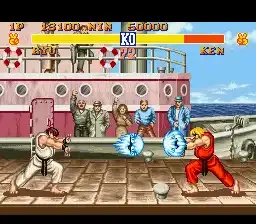
Play Street Fighter II – The World Warrior (Japan) online! It is one of the top-rated Super NES games you can play for free. No download, emulator, or setup required—jump straight into the action directly in your browser and start playing this classic in seconds.
Gameplay Mechanics and Challenge
Street Fighter II revolutionized the fighting game genre with its intricate gameplay mechanics and character selection. Players can choose from eight diverse fighters, each equipped with unique moves, special attacks, and combos. This variety not only encourages strategic gameplay but also caters to different playstyles, whether you prefer the brute strength of characters like Zangief or the agility of Chun-Li. The introduction of combo systems allowed players to execute powerful sequences, adding depth and complexity that kept players engaged for hours.
The difficulty level of the game was notable as well. Balancing skill and challenge, **Street Fighter II** offered a learning curve that demanded practice and precision. Players often found themselves honing their skills to rise through the ranks in competitive play, participating in local tournaments that would lead to regional and national competitions. This push for mastery contributed to its long-standing status as a staple in both casual gatherings and eSports scenes.
Historical Background and Innovations
First released in 1991, **Street Fighter II** emerged from Capcom’s ambition to create a groundbreaking title that would elevate arcade experiences. The game was initially trialed in Japan, where it quickly gained a cult following, leading to an international launch. Its vibrant graphics, fluid animations, and immersive audio soundtrack set new benchmarks in game design, which would influence countless titles that followed. Innovations such as character selection screens and multiplayer modes were ground-breaking at the time and became standard features in future fighting games.
The launch of various iterations like “Turbo” and “Super” only solidified its stature, offering enhanced features and roster expansions. These updates kept the player community engaged, driving the demand for arcade cabinets and home console releases alike. The game didn’t just break sales records; it ignited a fighting game renaissance, challenging the status quo and inspiring generations of game developers.
Cultural Significance and Legacy
The cultural impact of **Street Fighter II** cannot be overstated. It popularized competitive gaming and established fighting games as a legitimate genre within the gaming industry. This title created a global community of players and enthusiasts who continue to celebrate its legacy through events like EVO, where fans gather to witness the intense combat that the franchise inspired. Moreover, its iconic characters and memorable catchphrases have embedded themselves in popular culture, from memes to merchandise, ensuring that the game remains relevant even decades after its release.
In conclusion, **Street Fighter II** stands as a monumental achievement in gaming history. Its innovative gameplay, engaging mechanics, and cultural resonance have not only solidified its legacy but also paved the way for future titles in the fighting genre. The game’s significance continues to be felt today, making it a cornerstone of both retro and modern gaming experiences.