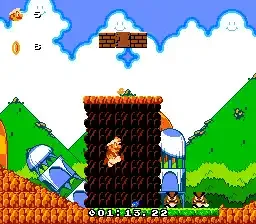
Play Super Mario Bros. CD online! It is one of the top-rated Super NES games you can play for free. No download, emulator, or setup required—jump straight into the action directly in your browser and start playing this classic in seconds.
Core Gameplay Mechanics and Difficulty
Super Mario Bros. revolutionized platform gaming with its accessible yet challenging gameplay. Players control Mario, navigating a vibrant world filled with iconic enemies like Goombas and Koopa Troopas. The controls are intuitive, allowing for smooth jumping and running, yet mastering the levels requires skill and timing. As players advance through eight worlds, the level design introduces new mechanics, including power-ups like the Super Mushroom and Fire Flower, which enhance Mario’s abilities. The game strikes a delicate balance between challenge and reward, appealing to both casual gamers and seasoned players.
The difficulty escalates as players progress, featuring complex enemy patterns and intricate level layouts. The timer adds an extra layer of pressure, compelling players to think quickly while navigating the treacherous landscapes. Each world culminates in a final confrontation with Bowser, the notorious antagonist, demanding strategic thinking and expert precision from players.
Historical Background and Innovations
Released in 1985 by Nintendo, Super Mario Bros. marked a significant turning point in the history of video games. At a time when gaming was struggling to regain popularity after the crash of the early 1980s, this title introduced gamers to a richly animated and immersive platforming experience. The meticulous design of the game was groundbreaking, pushing the limits of the Nintendo Entertainment System (NES) and setting a new standard for future titles.
One of the notable innovations was the use of scrolling backgrounds, which offered a sense of depth and movement previously unseen in platform games. This feature brought the Mushroom Kingdom to life, capturing players’ imaginations and setting the stage for a franchise that would grow to become a cultural phenomenon. The combination of engaging gameplay, memorable music, and imaginative graphics laid the foundation for the series’ enduring success.
Cultural Impact and Lasting Legacy
Decades after its release, Super Mario Bros. continues to influence the gaming landscape. It has spawned numerous sequels, spin-offs, and merchandise, solidifying Mario as a household name. The game’s nostalgic appeal resonates with players who fondly recall their childhood gaming experiences, often sharing them with new generations. Its iconic status in pop culture is evident through references in various media, including television shows, films, and even music.
The legacy of Super Mario Bros. can be summarized in several key points:
- Revitalized the gaming industry post-1983 crash
- Introduced innovative gameplay mechanics
- Laid the groundwork for future platformers
- Created a lasting cultural icon in Mario
Conclusion
Super Mario Bros. is more than just a video game; it represents a turning point in gaming history, characterized by innovative gameplay and lasting cultural impact. Its ability to engage players of all ages and skill levels is a testament to its design and nostalgia. As both a beloved classic and a vital part of gaming’s evolution, its influence remains strong, ensuring that it will be remembered for generations to come.