
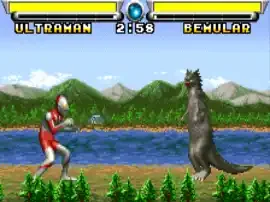
Play Ultraman – Hikari no Kuni no Shisha (J) online! It is one of the top-rated WonderSwan games you can play for free. No download, emulator, or setup required—jump straight into the action directly in your browser and start playing this classic in seconds.
Core Gameplay Mechanics and Difficulty
In the realm of retro gaming, Ultraman stands out not just for its vibrant visuals and engaging storyline but also for its unique blend of action and strategy. Players take control of the iconic Japanese superhero as he battles a variety of formidable foes in a quest to save humanity. The gameplay mechanics integrate fighting sequences where timing and precision are crucial, requiring players to master a range of moves and combos against relentless enemy attacks.
One of the standout features is the ability to charge up energy to execute powerful special moves, which adds a layer of strategy to encounters. The game is known for its escalating difficulty levels, with later stages presenting complex enemy patterns and increasingly fierce battles. This challenging aspect has made it a memorable experience for gamers who appreciate both skill and tactics in gameplay.
Historical Release Background
Released during the height of the Ultraman franchise’s popularity, Ultraman debuted in the early ’90s in Japan, capturing the imaginations of fans worldwide. The game was developed in conjunction with the success of the television series, which had already established a loyal following. Players were eager to embrace characters and settings that they had grown to love through the screen.
The graphics were considered cutting-edge for the time, featuring colorful sprites and dynamic backgrounds that brought the action to life. The sound design also played a pivotal role, with iconic sound effects and a memorable soundtrack that has left a lasting impression on longtime fans. As video game technology evolved, Ultraman managed to maintain its charm while appealing to a new generation of players who look back fondly at the classic titles that defined their childhoods.
Cultural Impact and Long-Term Legacy
The lasting legacy of Ultraman extends beyond mere nostalgia; it is a cornerstone in the cultural fabric of Japanese pop culture. The franchise has influenced countless games, comics, and movies, highlighting the superhero genre’s vast appeal. Its characters and themes remain relevant, with new iterations of Ultraman being introduced in contemporary media.
- Introduced a new generation to Japanese superhero mythology.
- Created a connection between television and gaming.
- Inspired various adaptations across different media platforms.
In conclusion, Ultraman serves as a powerful reminder of the robust synergy between entertainment and gaming that was prevalent in the ’90s. Its challenging gameplay persists in the minds of players, while its historical significance in the evolution of video games cannot be understated. Today, fans of retro gaming continue to celebrate this classic, ensuring its place in gaming history is well-preserved for future generations to explore and enjoy.

![Densha de Go! (J) [M]](https://www.retrogames.me/wp-content/uploads/densha-de-go-j-m-150x150.webp)
![Crazy Climber (J) [M][!]](https://www.retrogames.me/wp-content/uploads/crazy-climber-j-m-150x150.webp)
![Ring Infinity (J) [M][!]](https://www.retrogames.me/wp-content/uploads/ring-infinity-j-m-150x150.webp)
![Final Fantasy II (J) [!]](https://www.retrogames.me/wp-content/uploads/final-fantasy-ii-j-150x150.webp)
![Rockman & Forte - Mirai Kara no Chousen Sha (J) [M][!]](https://www.retrogames.me/wp-content/uploads/rockman-forte-mirai-kara-no-chousen-sha-j-m-150x150.webp)