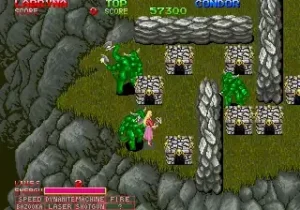
Play Devil World online! It is one of the top-rated Arcade games you can play for free. No download, emulator, or setup required—jump straight into the action directly in your browser and start playing this classic in seconds.
Unveiling the Gameplay Mechanics of Devil World
Devil World presents a unique blend of maze navigation and arcade action. Released in 1984 for the Famicom, this game stands out for its innovative gameplay mechanics, which involve controlling a character who must eat pellets while avoiding enemies. The player’s objective is to clear the stage of pellets while also managing the approaching dangers presented by devils, strategically utilizing power-ups to survive. This intricate dance of strategy and quick reflexes creates a challenging experience that appeals to both novice and veteran players.
What truly sets Devil World apart is its difficulty level. Unlike many of its contemporaries, the game features a punishing trajectory that ramps up as players progress, making it imperative to master the controls and understand enemy patterns. It cleverly leverages the concept of limited visibility, as levels are encompassed by walls, heightening the tension as players navigate through the increasingly perilous mazes.
The Historical Context of Devil World
The historical significance of Devil World cannot be overstated. Developed by Nintendo at a time when the gaming industry was still in its infancy, this title pushed the boundaries of what was expected of video games. Despite being less recognized than other Nintendo franchises, it’s noteworthy for being one of the few games designed by the legendary Shigeru Miyamoto, who later created iconic series like Super Mario and The Legend of Zelda.
The game’s release also coincided with a burgeoning arcade phenomenon, lending a distinct aura of nostalgia that surrounds it today. Furthermore, it was known for its integration of *cultural elements*, including thematic inspirations from Japanese folklore, which added depth to its gameplay. Interestingly, due to Japan’s regulatory environment at the time, Devil World was never released in North America, creating a sense of rarity and curiosity in gaming communities worldwide.
Lasting Legacy and Cultural Impact
Today, Devil World is celebrated for its influence on subsequent maze and puzzle games, embedding its essence into the gaming landscape. Its unique mechanics and cultural storylines paved the way for newer titles exploring similar themes. Retro gaming enthusiasts often reminisce about their experiences, showcasing the game’s importance in shaping the arcade genre and Nintendo’s development journey.
Conclusion
In retrospect, Devil World remains a fascinating piece of gaming history, exemplifying how early arcade games could intertwine complexity with cultural narratives. As a testament to its lasting appeal, the game continues to spark interest among collectors and retro gaming fans alike. Its innovative design choices and challenging gameplay ensure that **Devil World** holds an enduring legacy within the hearts of those who dare to navigate its intricate mazes.
![The King of Fighters 2002 Magic Plus II (bootleg) [Bootleg]](https://www.retrogames.me/wp-content/uploads/the-king-of-fighters-2002-magic-plus-ii-bootleg-bootleg-150x150.webp)