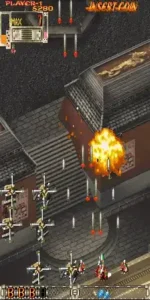
Play DoDonPachi Dai-Ou-Jou Black Label (V100 (2002.10.07 Black Ver), Japan) online! It is one of the top-rated Arcade games you can play for free. No download, emulator, or setup required—jump straight into the action directly in your browser and start playing this classic in seconds.
Introduction to DoDonPachi Dai-Ou-Jou
DoDonPachi Dai-Ou-Jou represents a pinnacle in bullet hell shooters, effectively combining intense action with intricate gameplay mechanics. Released as a refined version of its predecessors by the renowned developer Cave, this 2002 classic has created a legacy that resonates with retro gaming enthusiasts worldwide. With its elaborate scoring system and stunning visuals, it laid the groundwork for future shooters while capturing the hearts of players who yearned for a challenge.
Gameplay Mechanics and Difficulty
The core experience of DoDonPachi Dai-Ou-Jou revolves around its expertly designed gameplay mechanics. Players control a fighter plane, battling through relentless waves of enemies and intricate bullet patterns. The unique chaining system incentivizes players to maximize their score, creating an exhilarating blend of risk and reward. This game is notorious for its steep difficulty curve, pushing players to the limits of their reflexes and strategic thinking. Featuring different ship types with distinct abilities, players can choose their preferred strategy, whether that be focusing on high-speed movement or heavy firepower.
Technical Innovations
Furthermore, DoDonPachi Dai-Ou-Jou introduced several technical innovations that enhance the gaming experience. The game features a richly detailed graphical style, showcasing vibrant colors and meticulously crafted enemy designs that were groundbreaking at its time. The audio design also deserves mention, with a pulsating soundtrack that immerses players in the high-stakes atmosphere of the game. Furthermore, the Black Label version optimized gameplay, allowing for more dynamic scoring opportunities and refined mechanics, solidifying its status in the genre.
Cultural Impact and Legacy
The influence of DoDonPachi Dai-Ou-Jou extends beyond just gameplay; it has significantly shaped the bullet hell genre, serving as a benchmark for future developers. Its challenging nature has cultivated a dedicated community of players who appreciate the artistry and craft behind such demanding games. Many consider this title a rite of passage for aspiring shmup players, marking their path towards mastering the genre. Retrogaming events often celebrate this classic, ensuring its place in the annals of gaming history.
Conclusion
<pToday, DoDonPachi Dai-Ou-Jou is not just remembered for its breathtaking visuals and challenging gameplay, but as a cultural icon that continues to inspire developers and players alike. Its enduring legacy speaks to the passion and craftsmanship that define retro gaming. While the gaming landscape continues to evolve, the excitement and nostalgia surrounding this title ensure it remains a cherished part of gaming history, affecting future generations and preserving the thrill of the arcade experience.
![The King of Fighters 2002 Magic Plus II (bootleg) [Bootleg]](https://www.retrogames.me/wp-content/uploads/the-king-of-fighters-2002-magic-plus-ii-bootleg-bootleg-150x150.webp)