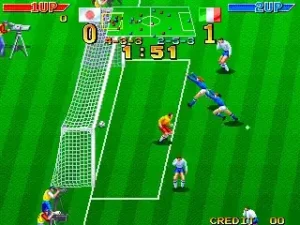
Play Dream Soccer ’94 (Japan) online! It is one of the top-rated Arcade games you can play for free. No download, emulator, or setup required—jump straight into the action directly in your browser and start playing this classic in seconds.
Reviving the Spirit of Soccer with Dream Soccer ’94
Dream Soccer ’94 encapsulates the essence of early ’90s gaming, combining engaging gameplay mechanics with a revolutionary approach to sports titles. Released during a period when soccer was rapidly gaining prominence in video gaming, this title transformed how players interacted with virtual sports. The vibrant graphics, along with intricate player animations, offered an exhilarating experience that drew fans into the stadium from the comfort of their homes. More than just a game, it became a nostalgic emblem for many who played it during their formative years.
Gameplay Mechanics and Design Innovations
The core gameplay of Dream Soccer ’94 stands out for its intuitive controls and strategic depth. Players could execute complex maneuvers with ease, thanks to the combination of simple button presses that delivered satisfying results. The game featured a unique overhead perspective that provided a comprehensive view of the pitch, allowing players to make informed tactical decisions. Challenges included not only opponents but also mastering the physics of the ball, which added layers of difficulty and realism:
- Dynamic player movements based on real-life tactics
- A range of shooting techniques, from finesse to power shots
- Interactive crowd reactions that enhanced immersion
These innovations contributed to a game that was not merely a simulation but a cultural artifact reflective of the era. Its design echoed the early ambition of developers to create sports games that were less about competition and more about artistic expression.
The Cultural Impact and Legacy
Dream Soccer ’94 has left an indelible mark on video gaming history, influencing future soccer games and inspiring a generation of players. Its blend of accessible gameplay and strategic challenges defined what gamers expected from sports titles. The nostalgia surrounding this game persists, with many fans celebrating its simplicity and charm. Today, it is frequently cited in discussions about the evolution of sports games and continues to be referenced in retrospectives and documentaries about gaming history.
In conclusion, Dream Soccer ’94 remains a beloved classic, cherished for its innovative gameplay and cultural significance. The game’s ability to capture the thrill of soccer while introducing pioneering mechanics makes it unforgettable. As the gaming landscape has evolved, titles like this remind us of the sheer joy and creativity that defined early gaming and continue to inspire developers—proving that, in the world of video games, some classics never fade away.
![The King of Fighters 2002 Magic Plus II (bootleg) [Bootleg]](https://www.retrogames.me/wp-content/uploads/the-king-of-fighters-2002-magic-plus-ii-bootleg-bootleg-150x150.webp)