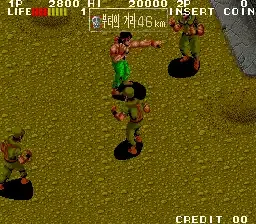
Play Ikari III – The Rescue (Korea, 8-Way Joystick) online! It is one of the top-rated Arcade games you can play for free. No download, emulator, or setup required—jump straight into the action directly in your browser and start playing this classic in seconds.
Exploring the Gameplay Mechanics of Ikari III
Ikari III is a standout title from the late ’80s, and it is remembered for its compelling action and cooperative gameplay. As a sequel, it built upon the mechanics of its predecessors while introducing innovative features typical of the era’s arcade scene. Players assume the role of elite soldiers on a mission to rescue captured comrades, navigating their way through enemy-infested territories. The game’s four-player capability showcased a shared experience, emphasizing cooperation over competition.
The core gameplay revolves around combat mechanics that blend shooting with strategic movement, facilitated by the iconic 8-way joystick. This unique design allowed smooth navigation, enabling players to dodge enemy fire while dishing out their own. The difficulty level is notable, often requiring memorization of enemy patterns and sharp reflexes to succeed. The game didn’t shy away from punishing players who didn’t master its mechanics, making it a challenging yet rewarding experience.
The Historical Context and Legacy
Released during the golden age of arcade gaming, **Ikari III** was pivotal in transitioning from simple arcade shooting games to more complex scenarios with rich narratives and cooperative play. It was initially launched in 1989 and quickly captivated players with its engaging storyline and character design. The game also reflected the cultural zeitgeist of the time, which was characterized by an interest in action-oriented plots and military-themed adventures.
This title didn’t just thrive in arcades; it left a mark on home consoles, leading to ports on platforms like the Nintendo Entertainment System. Its success contributed to the expansion of the beat ’em up genre, influencing future titles and developers. The incorporation of elements like power-ups and varied enemy designs created gameplay that felt fresh and endlessly replayable, ensuring that **Ikari III** remains fondly remembered decades later.
The Cultural Impact of Ikari III
In many ways, **Ikari III** became a staple in the retro gaming community. It introduced an iconic visual style and sound design that players still reflect on nostalgically. Its character themes and scenarios have inspired various sequels and remakes, showcasing its lasting relevance in gaming culture. Additionally, the game often appears in discussions of classic arcade experiences, representing not just a moment in gaming history but also a collective memory among fans.
Conclusion
In summary, **Ikari III** stands as a significant entry in the arcade gaming lexicon, captivating players with its engaging mechanics and cooperative gameplay. Its historical impact and the innovations it brought to the genre have etched it into the fabric of gaming culture. Today, it continues to be celebrated for its challenging gameplay and nostalgic connection, making it a beloved title for retro gaming enthusiasts everywhere.
![The King of Fighters 2002 Magic Plus II (bootleg) [Bootleg]](https://www.retrogames.me/wp-content/uploads/the-king-of-fighters-2002-magic-plus-ii-bootleg-bootleg-150x150.webp)