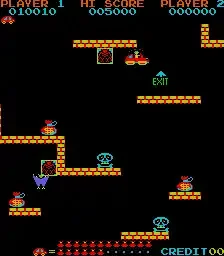
Play Jump Bug (bootleg) [Bootleg] online! It is one of the top-rated Arcade games you can play for free. No download, emulator, or setup required—jump straight into the action directly in your browser and start playing this classic in seconds.
Core Gameplay Mechanics of Jump Bug
In the realm of retro gaming, few titles capture the simple yet engaging essence of arcade classics like Jump Bug. Originally released in 1981, this platformer combines innovative physics with vibrant graphics, offering players an exciting experience. The core mechanics revolve around controlling a car that jumps between platforms, navigating various obstacles and enemies. Unlike traditional side-scrollers of its time, Jump Bug introduced a fluidity in movement that set it apart, allowing for creative strategies as players aimed to score high while avoiding pitfalls.
The level design is notable for its vertical challenges, requiring quick reflexes and strategic thinking. As players progress, they encounter increasingly difficult stages filled with enemies and tricky jumps. The unpredictability in the game dynamics—such as varying heights and the effects of gravity—enhances both the challenge and overall enjoyment, making each attempt a thrilling adventure.
Historical Significance and Technical Innovations
Jump Bug emerged during a pivotal era in video gaming, when arcade cabinets were revolutionizing entertainment. Developed by a lesser-known company, this title is often overshadowed by more popular contemporaries. However, its release marked a significant step in platform game design, influencing future games that relied on similar mechanics. The game’s incorporation of a scrolling background added depth and immersion, captivating players and encouraging endless gameplay.
Its bootleg variations created unique experiences that fueled local gaming scenes, allowing more gamers to tap into the experience without the confines of traditional distribution. This underground distribution contributed to the game’s cult status, keeping it alive in circles even years after its initial release. Today, it stands as a nostalgic reminder of an innovative period in video game history.
The Cultural Impact of Jump Bug
Despite its humble origins, Jump Bug has left an indelible mark on the landscape of gaming culture. As players reminisce about their early arcade experiences, this game frequently surfaces in discussions. It’s celebrated not only for its challenging gameplay but also for igniting a spirit of competition among players, often spurring homebrew versions and adaptations.
- Introduced innovative platforming mechanics
- Encouraged player creativity in strategies
- Influenced numerous indie and retro-inspired games
Conclusion
Ultimately, the legacy of Jump Bug is rooted in its gameplay innovations and cultural significance. While it may not enjoy the fame of some of its contemporaries, it holds a treasured place among gamers who remember the thrill of its simple yet challenging mechanics. Over the years, it has inspired new generations of game developers and players alike, ensuring that its impact resonates well into the future.
![The King of Fighters 2002 Magic Plus II (bootleg) [Bootleg]](https://www.retrogames.me/wp-content/uploads/the-king-of-fighters-2002-magic-plus-ii-bootleg-bootleg-150x150.webp)