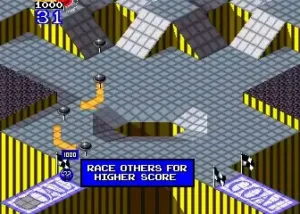
Play Marble Madness II (prototype) online! It is one of the top-rated Arcade games you can play for free. No download, emulator, or setup required—jump straight into the action directly in your browser and start playing this classic in seconds.
Introduction to Marble Madness II
The intricate world of Marble Madness II encapsulates a unique blend of platforming and puzzle mechanics that harkens back to a golden era of gaming. As a prototype of the beloved 1984 classic, this sequel aimed to elevate the original’s groundbreaking gameplay, expanding on its famous marble-rolling mechanics while introducing new challenges. Beyond its engaging levels, Marble Madness II provides a fascinating exploration of how game design evolved in the late 1990s, reflecting a shift toward dynamic, immersive environments that captivated players. In this article, we delve into the historical context and impact of this ambitious, yet ultimately unfinished, title.
Gameplay Mechanics and Challenges
At its core, Marble Madness II sought to build upon the challenging gameplay that made its predecessor a hit. Players guide a marble through a variety of treacherous terrain, navigating obstacles and avoiding enemies to reach the finish line. The game’s innovative control scheme allowed for precise maneuvers, demanding skill and timing from even the most seasoned players. The prototype featured several visually stunning levels, each designed to test reflexes and problem-solving abilities. However, although the gameplay was compelling, it also proved to be unforgiving, reflecting an era when difficulty was a core aspect of gaming.
Design Innovations and Technical Aspects
From a technical perspective, Marble Madness II included design innovations that were ahead of its time. The game utilized advanced graphics for its era, showcasing bright colors and smooth animations that enhanced the player’s experience. The dynamic levels were filled with interactive elements, adding layers of strategy and keeping players engaged. An ambitious soundtrack complemented the gameplay, creating an immersive atmosphere that resonated with audiences. Yet, despite these advancements, the game remained a prototype, limiting its release and ultimately consigning it to the annals of gaming history.
Cultural Impact and Legacy
Even in its unfinished form, Marble Madness II left a lasting cultural impact, influencing future platformers and puzzle games that drew inspiration from its core mechanics. It resonates with nostalgia among gamers who remember the challenges of the original title, and it stands as a testament to a time when creativity and innovation flourished in the gaming industry. The game continues to have a presence in retro gaming discussions, reminding us of the experiments that shaped modern gaming. In a sense, Marble Madness II lives on as a symbol of ambition within the gaming world, inspiring new generations while honoring its legacy.
Conclusion
The journey of Marble Madness II highlights the intricate balance of creativity and market demands that defines the gaming landscape. Though it remains a prototype and never saw an official release, its innovative features and challenging gameplay encapsulate the spirit of a bygone era. The game’s cultural significance endures as a reminder of the ambitious projects that enrich the history of video games. Players and fans of retro gaming continue to celebrate its contributions, ensuring that Marble Madness II will never be forgotten.
![The King of Fighters 2002 Magic Plus II (bootleg) [Bootleg]](https://www.retrogames.me/wp-content/uploads/the-king-of-fighters-2002-magic-plus-ii-bootleg-bootleg-150x150.webp)