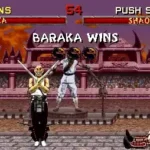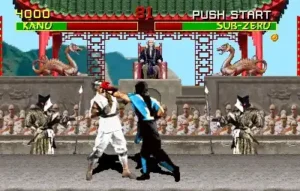
Play Mortal Kombat (rev 5.0 T-Unit 03/19/93) online! It is one of the top-rated Arcade games you can play for free. No download, emulator, or setup required—jump straight into the action directly in your browser and start playing this classic in seconds.
Core Mechanics and Gameplay Dynamics
Mortal Kombat revolutionized the fighting game genre with its blend of deep, strategic gameplay and visceral combat. Players engage in one-on-one battles, choosing from a diverse cast of characters, each with unique abilities and fatality moves. The game’s signature mechanics, such as energy bars and special moves, create an intense experience that requires both skill and reflexes. Players often need to master timing and combos, making each victory a testament to their dedication and practice.
The difficulty curve in Mortal Kombat is steep; mastering a character’s move set can take countless hours, but the satisfaction of pulling off a flawless combo or a spectacular fatality makes it worthwhile. Many players remember the thrill of facing off against challenging AI opponents or friends, reliving the tension and excitement of those iconic matchups. This high-stakes atmosphere has solidified the game as a timeless classic, revered by both newcomers and seasoned gamers alike.
Historical Context and Innovations
Released in arcades in 1992 and quickly adapted for home consoles, Mortal Kombat was not just a game but a cultural phenomenon. Its realism, achieved through digitized sprites of real actors, shocked audiences and set a new standard for visual fidelity in gaming. The introduction of unique characters and intricate backstories also brought a new depth to fighting games, making players more invested in their chosen fighters.
Notably, the game’s infamous fatalities sparked debates over violence in video games, raising questions that still resonate today. This controversial aspect has led to the establishment of rating systems for video games, emphasizing its broader societal impact. Mortal Kombat’s innovations didn’t stop at visuals; the introduction of competitive tournament play laid the groundwork for the esports landscape we see thriving today.
Cultural Impact and Lasting Legacy
The legacy of Mortal Kombat extends far beyond its arcade debut. It has spawned numerous sequels, movies, and merchandise, reflecting its deep-rooted presence in pop culture. The unforgettable theme music, catchy dialogue, and the infamous “Finish Him!” have made the game an enduring icon, known by even those who may not be gamers. This ongoing relevance speaks to the game’s ability to evolve while retaining its core essence, ensuring that it remains a beloved staple years after its initial launch.
In conclusion, Mortal Kombat’s blend of engaging gameplay mechanics, innovative design, and profound cultural impact has cemented its place in gaming history. From challenging opponents to unforgettable moments, it offers a nostalgic treasure for many. As gaming continues to evolve, the influence of Mortal Kombat reminds us of the power and artistry that can be found in the world of interactive entertainment.
![The King of Fighters 2002 Magic Plus II (bootleg) [Bootleg]](https://www.retrogames.me/wp-content/uploads/the-king-of-fighters-2002-magic-plus-ii-bootleg-bootleg-150x150.webp)