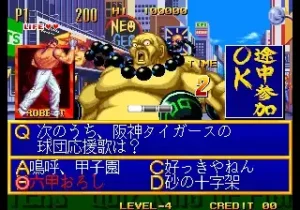
Play Quiz King of Fighters (SAM-080)(SAH-080) online! It is one of the top-rated Arcade games you can play for free. No download, emulator, or setup required—jump straight into the action directly in your browser and start playing this classic in seconds.
The Enduring Legacy of King of Fighters
The King of Fighters franchise, emerging from SNK’s creative crucible in the 1990s, revolutionized the fighting game genre. Not just another entry into the crowded arcade market, it merged characters from multiple SNK games, creating an intricate universe that captured the imagination of players. The depth of its mechanics and unique team-based gameplay offered a fresh perspective, making the King of Fighters series a cornerstone in fighting game history. Each installment brought innovation, and it quickly became a cultural phenomenon.
Gameplay Mechanics and Challenges
What truly sets King of Fighters apart from its contemporaries is its robust gameplay system. Players select a team of three characters, allowing for strategic depth through character synergy and team combos. Mastery of movement, timing, and character-specific abilities adds layers of skill, making the gameplay engaging and challenging. The addition of the “Just Defend” system in later editions urged players to refine their defensive play, pushing the boundaries of skill required. This mix of accessibility and difficulty molds a challenging learning curve, yet it rewards persistence, a hallmark that keeps enthusiasts revisiting the game.
Innovations and Cultural Impact
The game’s influence extends beyond gameplay; it has had a significant impact on competitive gaming culture. With its introduction of team battles, King of Fighters not only enhanced the player experience but also contributed to the rise of esports. Iconic characters like Kyo Kusanagi and Mai Shiranui have become synonymous with the fighting game community, becoming cultural icons and inspiring merchandise, artwork, and even crossover appearances in other media.
Conclusion
Decades after its debut, the King of Fighters series continues to resonate in the gaming landscape. Nostalgic players cherish its innovative design and distinct characters, while newcomers are drawn to its competitive nature. The legacy of King of Fighters isn’t just about the past; it’s about how it continues to shape the future of fighting games, proving that true classics never fade away. Whether revisiting its roots or engaging in new iterations, the series remains a testament to SNK’s vision and creativity.
![The King of Fighters 2002 Magic Plus II (bootleg) [Bootleg]](https://www.retrogames.me/wp-content/uploads/the-king-of-fighters-2002-magic-plus-ii-bootleg-bootleg-150x150.webp)