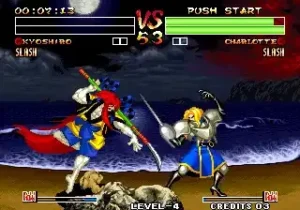
Play Samurai Shodown IV – Amakusa’s Revenge / Samurai Spirits – Amakusa Kourin (NGM-222)(NGH-222) online! It is one of the top-rated Arcade games you can play for free. No download, emulator, or setup required—jump straight into the action directly in your browser and start playing this classic in seconds.
Core Gameplay Mechanics and Difficulty
Samurai Shodown IV is notable for its unique fighting mechanics that blend weapon-based combat with strategic depth. Players engage in intense one-on-one duels, where each character wields a distinctive weapon that dramatically influences their fighting style. The introduction of the “Weapon Flip” mechanic allows players to disarm opponents, adding an extra layer of strategy. Timing and precision are critical, making this entry renowned for its high skill ceiling. The game’s difficulty is often marked as a challenge, requiring players to master not just their character’s moves, but also the art of predicting their opponent’s actions.
Historical Release Background
Launched in 1996 for the Neo Geo arcade systems, Samurai Shodown IV is the fourth installment in a beloved franchise that originally debuted in 1993. The game was developed by SNK during a time when fighting games were evolving, becoming more diverse in character design and gameplay mechanics. This title builds on its predecessors by enhancing visuals, combat fluidity, and introducing new characters like the iconic Amakusa. The game’s success in arcades led to its release on home consoles, further solidifying its cultural foothold and prompting an enduring legacy in the fighting game genre.
Technical Innovations and Cultural Impact
The technical innovations in Samurai Shodown IV are noteworthy, particularly the utilization of layered backgrounds and vibrant character animations that brought the settings to life. This visual fidelity contributed to a more immersive experience, allowing players to feel the weight and impact of each attack. Culturally, the game resonated with fans for its nod to samurai lore and feudal Japan, blurring the lines between history and fiction. Its legacy continues in modern games that borrow from its mechanics and aesthetic, ensuring that fans of retro gaming still hold it in high regard today.
Conclusion
In the grand tapestry of retro gaming, Samurai Shodown IV stands out as a cornerstone that exemplifies the beauty of weapon-based combat and intricate strategy. Its challenging gameplay encourages mastery and fosters a competitive spirit, while its historical context enriches the player experience. As the years pass, the impact of this title remains evident, influencing both new releases and the nostalgic recollections of those who experienced it in its prime. Players today continue to celebrate its unique blend of artistry and mechanics, ensuring that it will not fade into obscurity.
![The King of Fighters 2002 Magic Plus II (bootleg) [Bootleg]](https://www.retrogames.me/wp-content/uploads/the-king-of-fighters-2002-magic-plus-ii-bootleg-bootleg-150x150.webp)