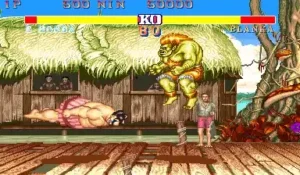
Play Street Fighter II’ – Champion Edition (920322 Japan bootleg set 2) [Bootleg] online! It is one of the top-rated Arcade games you can play for free. No download, emulator, or setup required—jump straight into the action directly in your browser and start playing this classic in seconds.
Core Gameplay Mechanics and Difficulty
Reviving the spirit of competition, **Street Fighter II** set a new standard in fighting games. Players dive into an engaging world where they select iconic characters, each possessing unique moves and styles. Mastery involves learning character-specific combos and timing, making the game both challenging and rewarding. The introduction of special moves and combo systems not only enhanced the gameplay but also paved the way for future fighters to adopt similar mechanics.
One of the standout features is the balance among the character roster. Every fighter—from Ryu to Chun-Li—has strengths and weaknesses that require strategic thinking. The adaptability needed to overcome various opponents adds layers of complexity to matches, making each fight feel fresh and exhilarating. Players often reminisce about those intense one-on-one battles, as even the simplest of confrontations could shift dramatically with a well-timed move.
Historical Release Background and Innovations
Initially launched in arcades in 1991, **Street Fighter II** revolutionized how fighting games were perceived. With its success, the Champion Edition came along, allowing players to choose the same character, a move that fundamentally changed competitive play. The popularity of this title ignited a gaming phenomenon, with home console versions soon following. This expansion into homes ensured that the game became a staple in both arcades and living rooms alike.
Technologically, **Street Fighter II** utilized hardware that highlighted vibrant graphics and responsive controls. These innovations resonated with players, establishing a template for the genre’s evolution. Furthermore, the game’s soundtrack complemented the action and is often regarded as one of the most memorable in gaming history. It laid the groundwork for the expansive universe of Street Fighter, introducing fans to a rich lore that continues to thrive today.
Cultural Impact and Legacy
The legacy of **Street Fighter II** is indelible in the gaming world. It inspired countless sequels, spin-offs, and had a hand in shaping the fighting game community. Tournaments featuring the game brought players together and fostered a sense of camaraderie. Its influence extended beyond gaming; films, merchandise, and even music have paid homage to this iconic franchise. Today, it serves not only as a reminder of nostalgic childhood memories but also as a benchmark of excellence in competitive gaming.
In conclusion, **Street Fighter II** remains a hallmark of gaming history. Its blend of innovative mechanics and cultural significance resonates with players of all ages. The thrill of mastering characters and engaging in epic battles ensures that this classic will continue to be celebrated, reminding us of a golden age in gaming.
![The King of Fighters 2002 Magic Plus II (bootleg) [Bootleg]](https://www.retrogames.me/wp-content/uploads/the-king-of-fighters-2002-magic-plus-ii-bootleg-bootleg-150x150.webp)