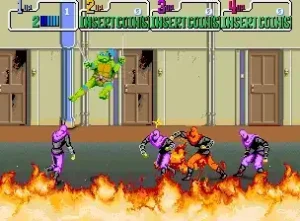
Play Teenage Mutant Ninja Turtles (US 4 Players, set 2) online! It is one of the top-rated Arcade games you can play for free. No download, emulator, or setup required—jump straight into the action directly in your browser and start playing this classic in seconds.
Core Gameplay Mechanics and Difficulty
The essence of the Teenage Mutant Ninja Turtles experience lies in its cooperative gameplay and engaging combat mechanics. Designed for up to four players, the game emphasizes teamwork as players pick their favorite turtle—Leonardo, Michelangelo, Donatello, or Raphael—to battle through various levels against iconic villains. The game’s mechanics are straightforward yet rewarding; players combine attacks, dodge enemy fire, and execute special moves using their unique abilities. The difficulty level challenges players, requiring them to strategize and communicate effectively to conquer formidable bosses like Shredder and Krang.
The game features a vibrant, side-scrolling environment that immerses players in the TMNT universe. With its colorful graphics and catchy music, each level brings a nostalgic charm that invites seasoned gamers and new players alike. The cooperative aspect also introduces a dynamic that amplifies the challenge; losing a life impacts the entire team, encouraging collaboration and tactical thinking. Players revisit each level, mastering enemy patterns and honing their skills to reach the final showdown. This blend of challenge and camaraderie creates a gaming experience that remains unforgettable.
Historical Release Background
Originally released in arcades in 1989, the Teenage Mutant Ninja Turtles arcade game was a product of its time, capturing the popularity of the franchise that exploded in the late ’80s. Developed by Konami, the game quickly became a hit due to its compelling blend of action and humor, mirroring the tone of the animated series. The four-player setup was innovative, providing an engaging social experience that set it apart from other arcade titles of the era.
This game’s design not only showcased technical advancements in graphics and sound for its time, but it also contributed to the growth of cooperative gameplay mechanics in the gaming industry. By allowing four players to join forces, it fostered a sense of community and shared excitement—a practice that has become foundational in contemporary gaming. The arcade version paved the way for successful home console adaptations, ensuring the Turtles’ legacy continues to be celebrated across generations.
Cultural Impact and Long-Term Legacy
The cultural impact of Teenage Mutant Ninja Turtles resonates far beyond the pixelated screens of the arcade. The game helped cement the Turtles as icons in pop culture, spawning merchandise, TV shows, and films. Its enduring appeal is reflected in modern adaptations and remixes that keep the spirit alive. The nostalgic charm combined with cooperative gameplay mechanics ensured that it remains a beloved title for both retro enthusiasts and newcomers.
Conclusion
The Teenage Mutant Ninja Turtles game is not merely a nostalgic trip down memory lane; it represents an important era in gaming history characterized by innovation, community, and fun. Its engaging gameplay, compelling design, and cultural significance have solidified its place in the hearts of many. As new generations continue to discover the joy of fighting alongside their favorite turtles, the game stands as a testament to the timeless appeal of cooperative gaming.
![The King of Fighters 2002 Magic Plus II (bootleg) [Bootleg]](https://www.retrogames.me/wp-content/uploads/the-king-of-fighters-2002-magic-plus-ii-bootleg-bootleg-150x150.webp)