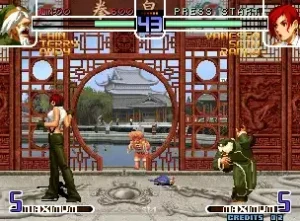
Play The King of Fighters 2002 Magic Plus (bootleg) [Bootleg] online! It is one of the top-rated Arcade games you can play for free. No download, emulator, or setup required—jump straight into the action directly in your browser and start playing this classic in seconds.
Exploring the Legacy of The King of Fighters 2002
The King of Fighters 2002 stands as a significant entry in the world of fighting games, renowned for its deep mechanics and rich character roster. Originally released in arcades, it distinguished itself by improving upon its predecessors, incorporating refined gameplay that appealed both to casual players and hardcore fans alike. This iteration not only showcased the series’ commitment to evolving combat mechanics but also allowed for seamless team dynamics that heightened the strategic elements of fights. Even today, its impact is felt, as fighters from all walks of life reminisce about the thrilling matches that defined their youth.
Gameplay Mechanics and Design Innovations
At the heart of The King of Fighters 2002 is a dynamic gameplay system that encourages skillful play and tactical depth. The introduction of the “Striker” system provided an innovative mechanic that allowed players to summon additional characters during matches, adding a layer of strategy unseen in previous installments. Each character boasted unique moves and special abilities, enabling players to create custom teams tailored to their fighting style. Furthermore, the difficulty ramp of the AI challenges added a rich layer of complexity, demanding not just reflexes but also thoughtful strategy to overcome various foes.
Historical Context and Bootleg Influence
Though its official release was met with acclaim, **The King of Fighters 2002** also saw a wave of bootleg versions that often altered gameplay mechanics or introduced character rebalances. These variations sometimes provided an avenue for wider access, especially for gamers in regions with limited availability. The emergence of bootleg editions contributed to the game’s cultural significance, highlighting both the creativity of fans and the enduring popularity of fighting games across diverse communities.
Cultural Impact and Lasting Legacy
The cultural impact of The King of Fighters 2002 can be observed in its enduring fanbase and the continued relevance of its characters in various media. Characters such as Kyo Kusanagi and Iori Yagami have entered the lexicon of fighting game icons, inspiring countless memes, fan art, and merchandise. Competitive events, like EVO, frequently feature this title, keeping its spirit alive and introducing new players to its thrilling world. The game stands as a testament to the genre’s evolution and a reminder of simpler times in arcade gaming, ensuring its place in the hearts of players for years to come.
In conclusion, The King of Fighters 2002 remains a distinguished title within the fighting game community. Its innovative mechanics, rich character roster, and enduring cultural legacy have secured its position as a beloved classic. As gamers continue to celebrate its contributions to the genre, it serves as a nostalgic reminder of the artistry and excitement that defined the golden age of arcade gaming.
![The King of Fighters 2002 Magic Plus II (bootleg) [Bootleg]](https://www.retrogames.me/wp-content/uploads/the-king-of-fighters-2002-magic-plus-ii-bootleg-bootleg-150x150.webp)