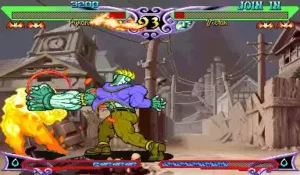
Play Vampire Hunter 2 – darkstalkers revenge (970929 Japan) online! It is one of the top-rated Arcade games you can play for free. No download, emulator, or setup required—jump straight into the action directly in your browser and start playing this classic in seconds.
Introduction to Vampire Hunter 2
Vampire Hunter 2 is a classic fighting game that continues to captivate gamers and nostalgics alike. Released in Japan on September 29, 1997, it stands as a testament to Capcom’s ability to blend dark fantasy elements with intense fighting mechanics. This title, part of the beloved Darkstalkers series, showcases how innovative gameplay paired with a unique aesthetic has left an indelible mark on the gaming landscape.
Core Gameplay Mechanics and Difficulty
At its core, Vampire Hunter 2 retains the fast-paced, combo-driven mechanics that fans have come to love. Players can choose from a diverse cast of characters, each with their own unique abilities and signature moves. The game’s combat system features a “chain combo” mechanic, allowing players to seamlessly link attacks and keep their opponents on the defensive. This encourages players to master not just individual characters but also the nuances of every match-up, enhancing the game’s replayability.
- Diverse character roster with unique playstyles
- Innovative chain combo mechanics
- Dynamic stage designs that can impact battles
Despite its vibrant visuals, the difficulty level can be challenging, especially for newcomers. Veteran players often appreciate the strategic depth that demanding encounters provide, making skill development rewarding throughout the game’s lifespan.
Historical Context and Cultural Impact
When Vampire Hunter 2 debuted, it not only built upon the foundation laid by its predecessor but also introduced several technical innovations. The game featured enhanced graphics and animation, marking a significant leap in the abilities of 2D fighters. Additionally, it introduced a refined balance between characters, ensuring that agile fighters and heavy hitters could effectively contest one another. This era of arcade fighting games bore witness to fierce competition, and titles like this pushed others to elevate their designs.
As a part of the 1990s fighting game renaissance, the cultural significance of Vampire Hunter 2 is noteworthy. Its characters have inspired numerous adaptations across various media, including anime and manga. The game remains a cherished memory for those who first experienced it in arcades, creating an enduring legacy that encourages discussions around the art of fighting games.
Legacy and Continued Relevance
The lasting impact of Vampire Hunter 2 is felt in contemporary gaming. It’s not just a nostalgic relic; its character designs and gameplay mechanics continue to inspire modern titles. The evolution of fighting games owes much to the innovations introduced here, and it serves as a reminder of the creativity that defines the genre.
Conclusion
In conclusion, Vampire Hunter 2 remains an iconic entry in the fighting game genre, embodying a unique blend of challenging gameplay, distinctive characters, and a rich historical backdrop. As both a benchmark for future titles and a beloved classic among fans, it solidifies its place in video game history, proving that even decades later, it continues to resonate with players around the world.
![The King of Fighters 2002 Magic Plus II (bootleg) [Bootleg]](https://www.retrogames.me/wp-content/uploads/the-king-of-fighters-2002-magic-plus-ii-bootleg-bootleg-150x150.webp)