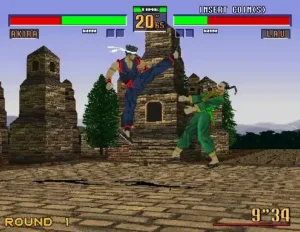
Play Virtua Fighter 2 (Version 2.1) online! It is one of the top-rated Arcade games you can play for free. No download, emulator, or setup required—jump straight into the action directly in your browser and start playing this classic in seconds.
Introduction to Virtua Fighter 2
The Virtua Fighter 2 experience marked a pivotal moment in gaming history, showcasing advanced 3D graphics and groundbreaking mechanics that set the standard for fighting games to come. Released in arcades in 1994 and later adapted for home consoles, this classic has captivated players with its strategic depth and polished gameplay. With its diverse roster and complex combat systems, it redefined the fighting genre and left a lasting legacy that gaming enthusiasts still cherish today.
Core Gameplay Mechanics and Difficulty
At its core, Virtua Fighter 2 is celebrated for its intricate gameplay mechanics that emphasize skill over button-mashing. Characters possess unique moves and fighting styles, inviting players to delve into an array of strategic options. Each fighter has specific strengths and weaknesses, making high-level play a matter of mastering not just individual characters, but the intricate interactions between them. Players quickly find that understanding the timing of moves and counters is essential, as the game’s combat system rewards patience and precision. This level of complexity sets the stage for intense matches that often leave players on the edge of their seats.
Historical Release Background and Innovations
The release of Virtua Fighter 2 in arcades showcased Sega’s commitment to pushing the boundaries of technology, featuring improved graphics and animation compared to its predecessor. It was among the first games to utilize motion-capture technology, lending a realistic feel to character movements. The introduction of 3D fighting environments further enhanced immersion and opened up new strategies, as players could use the environment to their advantage. With a competitive arcade scene flourishing around it, the game fostered a community that celebrated its deep mechanics, elevating its status as a cornerstone of fighting game history.
Cultural Impact and Long-term Legacy
The influence of Virtua Fighter 2 extends beyond its technical innovations. It helped establish the format of 3D fighting games, influencing titles such as Tekken and Soulcalibur. Moreover, its enduring popularity can be seen in how it introduced competitive gaming to a wider audience, paving the way for esports. Even today, its principles continue to be reflective of a fight genre that champions technique, strategy, and player skill.
Conclusion
In summary, Virtua Fighter 2 not only set the bar for future fighting games but also created a community passionate about mastering its depth and intricacies. Through its combination of technical innovation and engaging gameplay, it secured a revered place in gaming history. As both a historic artifact and a benchmark for modern titles, Virtua Fighter 2 remains a beloved classic, ensuring its legacy will endure for generations to come.
![The King of Fighters 2002 Magic Plus II (bootleg) [Bootleg]](https://www.retrogames.me/wp-content/uploads/the-king-of-fighters-2002-magic-plus-ii-bootleg-bootleg-150x150.webp)