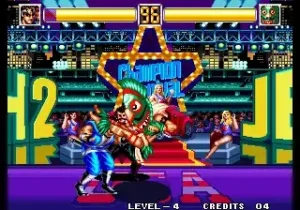
Play World Heroes 2 Jet (ADM-007)(ADH-007) online! It is one of the top-rated Arcade games you can play for free. No download, emulator, or setup required—jump straight into the action directly in your browser and start playing this classic in seconds.
Rediscovering the Gameplay of World Heroes 2 Jet
The retro classic, World Heroes 2 Jet, stands out in the fighting game genre for its vibrant characters, intricate mechanics, and fast-paced action. Released by SNK in the mid-90s, this game continued the legacy established by its predecessor, introducing a plethora of new features that would captivate fans of martial arts and competitive gaming alike. The gameplay was innovative, employing a unique “Jet” system that allowed for faster movement and dynamic combat, which made battles feel exhilarating and intense.
Historical Background and Technical Innovations
Launched in 1994, the sequel built on the success of the original World Heroes by enhancing its character roster and refining the game engine. This iteration introduced new fighters, each with distinctive abilities and fighting styles inspired by historical figures and cinematic tropes. The graphics were a step forward, showcasing detailed sprites and vibrant backgrounds that enhanced the overall experience. Moreover, the game’s signature “Destruction Mode” enabled players to unleash devastating attacks, setting it apart during a time when fighting games were trying to innovate after the success of Street Fighter II.
Legacy and Cultural Impact
World Heroes 2 Jet has not just survived the test of time but has become a nostalgic reminder of the golden age of arcade gaming. Many players fondly recall the unique energy each character brought, alongside their memorable special moves. The game remains influential, often referenced in discussions about the evolution of fighting games, and has left a long-lasting impact on the genre. Its engaging mechanics and colorful art style ensure it occupies a cherished spot in the hearts of retro gaming enthusiasts.
Why It Still Resonates Today
Even decades after its release, World Heroes 2 Jet continues to attract attention, especially among new generations eager to explore classic fighting games. Its blend of skill, strategy, and fantastical themes strikes a nostalgic chord with older players, while its accessible mechanics invite newcomers to dive in. As retro gaming regains popularity, titles like this serve as gateways to understanding the evolution of game design and player engagement.
![The King of Fighters 2002 Magic Plus II (bootleg) [Bootleg]](https://www.retrogames.me/wp-content/uploads/the-king-of-fighters-2002-magic-plus-ii-bootleg-bootleg-150x150.webp)