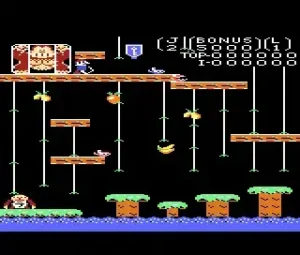
Play Donkey Kong Junior (Europe) online! It is one of the top-rated ATARI 7800 games you can play for free. No download, emulator, or setup required—jump straight into the action directly in your browser and start playing this classic in seconds.
Gameplay Mechanics and Difficulty
The gameplay of Donkey Kong Junior revolves around the unique dynamic of rescuing a character rather than the traditional protagonist role. Players control Junior, the son of Donkey Kong, as he attempts to free his father from captivity. This inversion of roles adds an intriguing twist, presenting various challenges that require skillful navigation through perilous platforms and the strategic use of vine mechanics.
Each level presents escalating difficulty, with obstacles like snapping jaws and falling fruits adding to the complexity. Players must not only dodge these hazards but also engage with the environment, using swinging vines and platforms to reach higher areas. This intricate blend of strategy and reflexes makes each victory feel rewarding, encapsulating the era’s challenge-driven gameplay.
Historical Background and Cultural Impact
Released in 1982 as a follow-up to the original Donkey Kong, Donkey Kong Junior is often regarded as a groundbreaking title in the arcade scene. Developed by Nintendo, it showcased their innovative approach to video game design, emphasizing character relationships and player empathy. Unlike its predecessor, which centered around jumping and dodging, this sequel introduced players to a new world that emphasized rescue missions and character development.
The game’s artistic design, vibrant colors, and catchy music created a lasting impression. It appealed not only to younger audiences but also to families, making arcade visits a shared experience. Donkey Kong Junior paved the way for spin-offs and featured in numerous compilations, securing its place in gaming history. Its memorable design led to an enduring legacy, influencing future titles and solidifying Nintendo’s status in the gaming industry.
Legacy and Nostalgia
Even decades after its release, Donkey Kong Junior continues to resonate with fans and collectors. Its nostalgic value is significant, as many gamers fondly recall the challenging levels and the iconic father-son dynamic. Retro gaming events frequently feature this title, and it remains a popular choice among arcade enthusiasts, underlining its lasting impact in both popular culture and gaming history.
Conclusion
In summary, Donkey Kong Junior is more than just a sequel; it’s a pivotal moment in gaming history that introduced unique gameplay mechanics and emotional narratives. Its innovative design and challenging gameplay created a lasting legacy that continues to influence new generations of gamers. This title remains a cherished part of arcade history, reminding us of the joy and challenge that retro gaming has to offer.