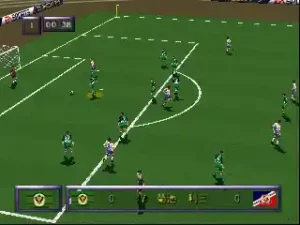
Play J.League Live 64 (Japan) online! It is one of the top-rated Nintendo 64 games you can play for free. No download, emulator, or setup required—jump straight into the action directly in your browser and start playing this classic in seconds.
Core Gameplay and Mechanics
J.League Live 64 offers a unique blend of simulation and arcade-style soccer that captures the spirit of Japanese football. Players can choose from various teams in the J.League, featuring authentic rosters and real-life stats that enhance the gaming experience. The controls are straightforward, making it accessible yet engaging for both seasoned players and newcomers. While the pace of the game is frenetic, mastering dribbling, passing, and shooting mechanics requires practice. This mix of accessibility and complexity is one reason why the game remains a staple in retro gaming discussions.
Historical Background and Release Significance
Launched in 1997 for the Nintendo 64, J.League Live 64 was one of the first soccer video games to emphasize realistic team dynamics and gameplay that mirrored the excitement of live matches. This period marked a significant shift in video game design, moving from 2D sprites towards 3D environments. The game utilized motion capture technology for player animations, creating more fluid and lifelike movements. At a time when soccer games were often relegated to basic mechanics, this innovative approach allowed for greater immersion, setting a new standard for future sports video games.
Cultural Impact and Legacy
The cultural relevance of J.League Live 64 extends beyond its gameplay mechanics. It played a crucial role in the popularization of soccer in Japan during the late ’90s. By showcasing local teams and players, the game fostered a sense of pride among fans and contributed to the growing popularity of the J.League. Today, it is fondly remembered as a nostalgic artifact of the era, emblematic of a time when retro gaming still relied heavily on creativity and passion rather than mere graphics.
Conclusion
In summary, J.League Live 64 stands as a landmark title in the world of sports video games, notable for its engaging gameplay and historical significance. It not only entertained a generation of gamers but also played a pivotal role in elevating soccer’s status in Japan. Its enduring legacy continues to inspire both gamers and developers, illustrating how video games can capture the essence of cultural phenomena while delivering a compelling interactive experience. Today, it serves as a reminder of gaming’s rich history and its ability to connect fans with their passions.