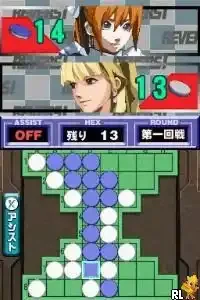
Play 1500 DS Spirits Vol. 4 – Reversi (Japan) online! It is one of the top-rated Nintendo DS games you can play for free. No download, emulator, or setup required—jump straight into the action directly in your browser and start playing this classic in seconds.
Core Gameplay Mechanics and Difficulty
The classic game of Reversi stands out for its elegant simplicity yet deep strategy, making it a staple in both casual and competitive circles. Players take turns placing colored discs on an 8×8 grid, aiming to sandwich their opponent’s pieces between their own, flipping them to your color. This seemingly straightforward mechanic evolves into a layered battle of wits as players must anticipate their opponent’s moves while calculating potential future setups. The challenge lies not just in acquiring the most pieces but in controlling key positions on the board that can lead to decisive victories. Whether you’re a beginner or a seasoned player, mastering the timing and placement of moves creates an engaging layer of intensity that’s hard to replicate.
Historical Background and Cultural Impact
Originally derived from earlier games in the 19th century, Reversi gained prominence through various incarnations, including the notable Othello brand. Its digital leap onto platforms like the Nintendo DS in editions like this one cemented its status in gaming history. Celebrated for its quick gameplay and strategic depth, players of all ages have embraced it over the decades, allowing it to transcend generational gaps. The appeal lies in its ability to foster social interaction; many remember gathering with friends or family for friendly competitions, the air thick with anticipation. Over the years, Reversi has also inspired numerous tournaments and events, further solidifying its legacy as a beloved intellectual challenge.
Design Innovations in the Nintendo DS Version
The Nintendo DS version of Reversi brought several technical enhancements that enriched user experience. Utilizing the touchscreen allowed for intuitive gameplay, making it accessible for newcomers while providing veterans with the precision needed for advanced strategies. Additionally, the AI difficulty levels ensured that players of all skill tiers could find a challenge, promoting long-term engagement. Coupled with sleek graphics and an upbeat soundtrack, the game’s design effectively retains the classic feel while modernizing its approach to meet contemporary gaming standards.
In conclusion, Reversi has firmly established its place in the pantheon of strategic board games, offering a perfect blend of simplicity and complexity. Its historical roots and ongoing evolution, particularly with advancements in digital formats, showcase its timeless appeal. As players continue to gather around boards or screens, the memories formed and the skills honed keep this classic alive for future generations. Today, it remains a testament to how a simple concept can achieve lasting impact, both in gaming culture and social circles.